Software as a Service (SaaS) delivers access to a provider-operated application. Users may access it through a browser, desktop client, mobile app or API. SaaS is commonly distinguished from infrastructure as a service (IaaS) and platform as a service (PaaS), which leave more of the application stack for the customer to manage.
Pricing may be subscription-based, seat-based, usage-based, transaction-based or a combination. A recurring payment alone does not make software SaaS; the service delivery and operating model matter.
In this post, we will present an in-depth overview of what software as a service (SaaS) is, the benefits of using SaaS, and the main types of SaaS solutions available today.
For founders, SaaS decisions now depend on category, market, and operating model. Compare vertical SaaS vs horizontal SaaS, the SaaS market in KSA, and related enterprise options like cloud ERP software before choosing a product direction. Once the category is clear, the next question is whether the product is showing SaaS product-market fit.
Hapy’s SaaS category lens
We would not choose a SaaS category because it sounds large. We would ask:
- Who owns the urgent pain? A broad horizontal product needs a clear wedge, while vertical SaaS can win by knowing one industry deeply.
- How specific is the workflow? The more industry-specific the workflow, the more likely vertical SaaS or custom software has an advantage.
- Where does the data live? SaaS products often win when they become the trusted operating layer for records, approvals, billing, or customer communication.
- What makes the product defensible? Distribution, workflow depth, integrations, switching cost, and service quality matter more than the category label.
What Exactly is Software as a Service (SaaS)?
A SaaS provider operates the hosted application and agreed infrastructure. Customers still configure accounts, access, integrations and data handling, and may need to install or update client software. The division of work depends on the product and contract.
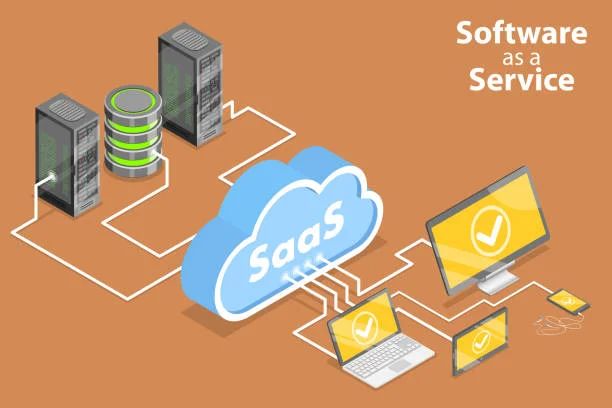
Define shared responsibilities before adoption. The provider should explain its availability, security and recovery commitments; the customer must assign administrators, enforce appropriate permissions, manage users and verify export or recovery needs. SaaS does not transfer every security responsibility to the vendor.
Horizontal and vertical SaaS are market choices
Horizontal SaaS addresses a function across industries, such as project coordination. Vertical SaaS focuses on an industry’s workflows, such as property management. Neither category is inherently more successful, affordable or easy to distribute. A horizontal tool faces broad competition; a vertical tool may need deeper domain, integration and support work.
How category changes the business model
This matrix describes possible commercial patterns for hypothetical products. It is not a statement of current vendor pricing or an industry benchmark.
| Product example | Buyer | Pricing unit to test | Acquisition route to test | Retention and cost considerations |
|---|---|---|---|---|
| Horizontal project tool | Team lead or operations buyer | Active seat or workspace | Self-serve trial and team invitations | Recurring collaboration; support and storage costs |
| Enterprise CRM | Sales leadership with IT/procurement | Seat, edition and implementation | Sales-assisted evaluation | Data quality and workflow adoption; integration and onboarding cost |
| Cloud ERP | Finance/operations executive | Modules, users and deployment scope | Partner or enterprise sales | Operational dependence; migration and support burden |
| Accounting tool | Owner or finance team | Entity, plan and feature tier | Accountant referrals or self-serve | Regular reconciliation; jurisdiction-specific updates |
| Vertical property workflow | Property operator | Unit, location or portfolio | Industry channels and pilots | Daily operational fit; local integration and service needs |
| Usage-based developer service | Developer champion and budget owner | Metered API usage plus commitment | Documentation and technical trial | Reliable integration; infrastructure cost and usage volatility |
| Ecommerce service | Merchant | Subscription plus relevant transaction/service fees | Self-serve setup or agency partner | Merchant success; payment, apps and support economics |
For a hypothetical accounting tool, a monthly subscription is plausible because reconciliation recurs. For a rarely used one-off utility, repeated billing may not fit customer value. Test the value metric, purchasing authority and repeat-use pattern before choosing a plan structure.
Measure acquisition cost against contribution after hosting, third-party services, support and onboarding. For usage pricing, test whether revenue rises with cost and whether customers can predict the bill. For enterprise sales, include implementation and procurement time. Retention should reflect continued value, not merely difficulty exporting data.
Different Types of SaaS Solutions
There is a wide variety of software that is offered as a service. The area or sector that the SaaS product enhances, such as internet banking or communication, is the primary consideration in the process of categorizing customers into categories.
The fact that new categories of SaaS solutions keep appearing is one of the most important parts of the SaaS market. A software solution hosted in the cloud can now support nearly every area of work, from finance and HR to education, logistics, ecommerce, and vertical industry operations. Because SaaS apps can be used from any location, they remain valuable for distributed teams and companies that need faster deployment.
Therefore, as new types of SaaS continue to appear, the main categories available today are as follows:
-
Customer Relationship Management (CRM) software
-
Enterprise Resource Planning (ERP) Software
-
Accounting software
-
Project Management Software
-
CMS and e-commerce platform
-
Communication platforms
-
HR/HRM solutions
-
Payment Gateways and Billing Solutions
1) Customer Relationship Management (CRM) software
The information collected from customers is a resource that is priceless to any company. CRMs make it possible for companies to compile and retain all of their client data in a way that is both efficient and safe. It is possible to strengthen customer connections, customer segmentation, and data security by efficiently keeping customer data.
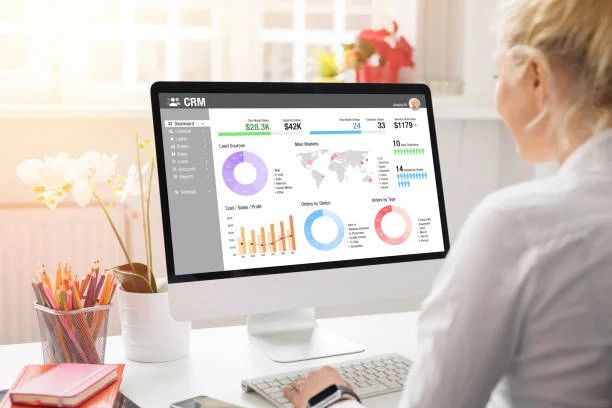
CRM systems can serve B2B and B2C organizations. Sales, marketing and service teams use them to manage customer information and workflow. Suitability depends on permissions, data quality, integrations and adoption. Examples to investigate include:
2) Enterprise Resource Planning (ERP) Software
Large corporations and industries make use of this software as a service platform to manage an extensive variety of business procedures.
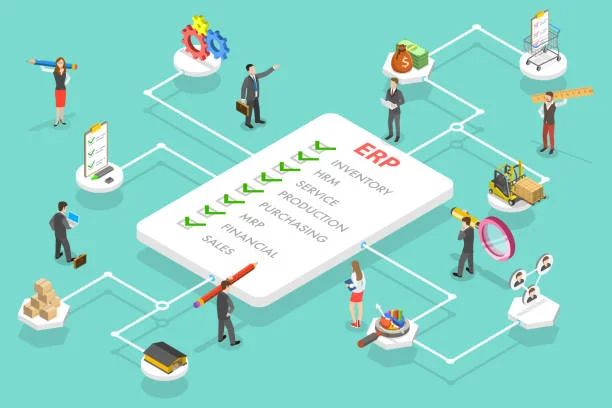
Among these include budgeting, risk management, accounting, and compliance requirements. Because it offers so many different services, this kind of SaaS makes it possible to consolidate and monitor all of these activities in one location.
Some famous ERP systems are:
3) Accounting Software
It is essential for every kind of organization to have accurate financial records. As a result, account and billing software systems that are delivered via SaaS may provide users with a wide variety of advantages. They assist you in monitoring your cash flow as well as your transactions and budgets. When it comes to managing a company’s finances, utilizing a SaaS application may assist save time and effort on both fronts. In particular, the number of hours spent in reconciling accounts, correcting financial problems, entering data, handling payroll and taxes, and collecting payments from customers.

Banking, businesses, manufacturing, retail, and even the government are all examples of typical industries that use account and/or billing software provided by SaaS providers.
Examples of accounting software are:
4) Project Management Software
Businesses are juggling many projects at the same time, or at the very least, projects are being juggled within teams. Software as a service (SaaS) for project management is a system that may assist companies or teams in remaining organized and can keep track of their active projects. They offer the capability of planning, tracking, allocating, scheduling, communicating, and collaborating with other members of a team on a project all inside a single location.
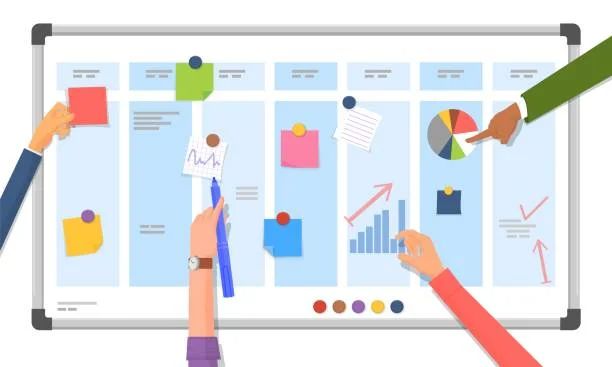
Project-management services can support both small teams and larger organizations. Evaluate how the tool handles ownership, dependencies, reporting and collaboration for your workflow.
Examples of PMS are:
5) CMS and E-commerce Platforms
A content management system, or CMS, is often some kind of web-based application or a low-code toolkit that allows users to more easily construct websites or apps. It does not need the user to know how to program or have any other kind of technical expertise in order for them to be able to create, manage, and alter information.
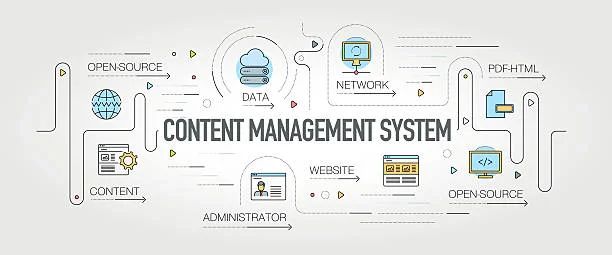
Distinguish WordPress.com, a hosted service, from self-hosted WordPress software, where the site owner or hosting arrangement carries more operational responsibility. Shopify and Webflow are other hosted platforms to investigate for their supported use cases; check the relevant plans and limits.
A hosted CMS can reduce some infrastructure work, but configuration, content quality, access and integrations still need an owner. Cost, maintenance and scalability depend on the platform and workload, and the category does not guarantee SEO performance.
The terms “Enterprise Resource Planning” (ERP), “Customer Experience,” “Marketing/Email,” and “Product Management” are examples of some of the other common types of SaaS solutions.
Examples of CMS are:
6) Communication platforms
Communication SaaS applications grew quickly as teams became more distributed. Typical office techniques such as email, phone calls, and in-person meetings are now supported by messaging, video calls, async updates, and shared workspaces as a result of the proliferation of communication-based software solutions.
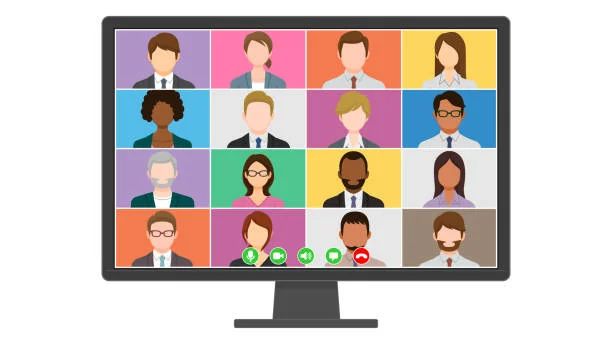
These are popular software as a service (SaaS) products. The ability to send immediate messages and share files with people in any area of the world is the primary benefit offered by communication platforms. These applications are frequently utilized by organizations as a means of facilitating communication among their staff members.
Employees are able to exchange and discuss projects when software as a service (SaaS) for communication is coupled with software as a service (SaaS) suppliers for collaboration, such as Google Drive. Having features such as getting automated in-app alerts whenever updates are made is one example of what may be done. A streamlined service, improved teamwork, and centralized communication are all provided in one convenient location.
Most of the time, these communication platforms also provide mobile applications. These mobile applications enable users to connect with the networks of their friends and colleagues and obtain all of the relevant information at any time.
Examples of communication SaaS are:
7) HR/HRM solutions
HR services can help the people responsible for employee and applicant records, whether or not the business has a separate HR department. Define access carefully because those workflows may contain sensitive information.

The management of human resources is the focus of this software as a service solution. Such programs include functions such as employee evaluations, progress reports and analysis, scheduling of job interviews, and recruiting of potential candidates. Because they enable the storage of all information on applicants in a single location, they are particularly useful to businesses that are always expanding and bringing on new employees.
Users at commercial enterprises stand to have access to a variety of advantages when they use HR SaaS software solutions. The capacity to effectively manage personnel in relation to work schedules, vacation time, sick leave, etc. The program is also able to monitor the performance of employees, as well as their length of service to the organization, and it may assist in the recruitment and retention of important personnel. The human resources department of a company is an essential component since it serves as the conduit for information dissemination and employee communication. Keeping employees informed, involved, and productive in their work is essential to the development of a culture of collaboration inside the firm.
Examples are:
8) Payment Gateways and Billing Solutions
Payment gateways make it possible for businesses to process thousands of transactions every day in a quick and simple manner so that they may accept payments.

A payment provider can reduce the merchant’s direct handling of card data, depending on the integration. It does not remove the possibility of compromise. Merchants still need secure accounts, correct access, appropriate checkout integration, transaction reconciliation and applicable compliance work.
Processing financial transactions manually take significantly more time than doing it online, which is another advantage of using a payment gateway.
A further advantage of using such software is that it provides payment reporting, which makes it possible for you to indicate or flag any form of questionable behavior or payments. Publishing reward coupons are a fun function that can be found in some of the online payment gateways. It is a simple item that can be used to both attract consumers and delight them.
Choose the model around the buyer
Choose a SaaS category by its buyer, recurring workflow, value metric, acquisition route and cost to serve. Each category of software offered as a service (SaaS) has its own unique method for resolving a user’s specific issue, whether it be the processing of a credit card payment, the transmission of a file to a manager, or the generation of a task board for a group of employees.
Use Hapy’s MVP development process to turn that commercial model into a bounded first workflow and a measurable adoption test.