Application developer and software developer are overlapping titles, not two regulated professions. One company may use them interchangeably. Another may reserve application developer for people who build user-facing products and use software developer for a broader role across backend systems, data, integrations, and infrastructure.
The distinction matters when you hire. A title cannot tell you whether someone can design an API, debug a mobile release, model permissions, improve a slow query, or turn a rough workflow into a usable interface. Start with the work and its risks.
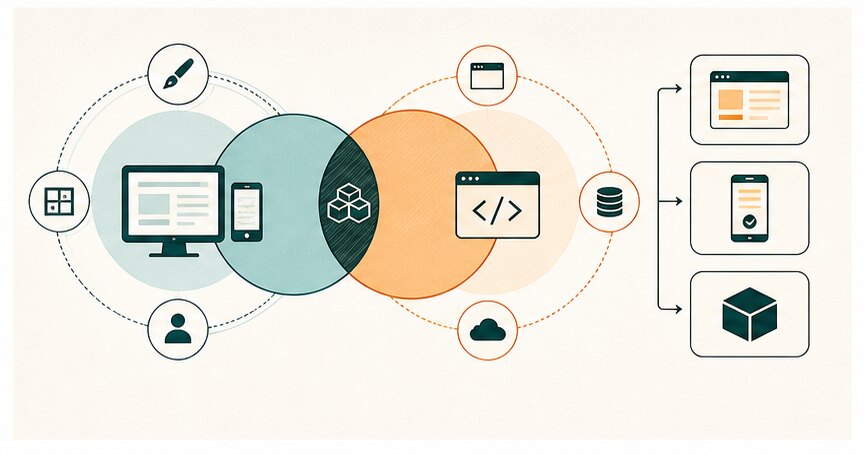
The short answer
An application developer usually builds and maintains software that a user interacts with directly, such as a mobile app, web app, desktop tool, customer portal, or admin panel.
A software developer may do application work, but the title often covers a wider system: services, APIs, databases, integrations, automation, internal platforms, testing, and deployment.
| Role | Typical focus | Common products |
|---|---|---|
| Application developer | User flows, screens, platform behavior, app releases, and usability | Mobile apps, web apps, portals, dashboards, desktop applications |
| Software developer | Application and system logic, APIs, data, integrations, reliability, and maintenance | SaaS products, business systems, services, platforms, and internal tools |
| Full-stack developer | Frontend and backend delivery across one product slice | Early products and small teams that need one person across several layers |
| Software engineer or technical lead | Architecture, quality standards, scaling decisions, and technical direction | Products where poor system decisions would create expensive rework |
These are tendencies, not strict boundaries. Read the responsibilities, inspect past work, and test how the candidate thinks through your product.
What an application developer does
Application developers turn product requirements and designs into working software for a particular platform or user group.
Their work can include:
- Mapping requirements into app behavior.
- Building screens, forms, navigation, and user flows.
- Connecting the interface to APIs and device capabilities.
- Handling loading, empty, offline, and error states.
- Writing and maintaining tests.
- Debugging browser, device, and operating-system issues.
- Preparing releases for an app store or production environment.
- Monitoring crashes and responding to user problems.
- Updating the application as product requirements change.
A mobile application developer may specialize in Kotlin and Android, Swift and iOS, Flutter, or React Native. A web application developer may work with a browser framework, accessibility, performance, and API integration. Desktop and embedded applications have their own platform constraints.
Application development is not only interface work. A strong application developer understands state, data flow, authentication, performance, security, testing, and release operations. The role is still usually anchored in the experience delivered to a user.
What a software developer does
Software developer is the wider label. The role may include user-facing applications, but it can also focus on systems that users never see directly.
Typical responsibilities include:
- Designing services, APIs, and data models.
- Building business rules and workflow automation.
- Integrating third-party tools and internal systems.
- Implementing authentication, permissions, and audit history.
- Improving performance and reliability.
- Writing automated tests and deployment tooling.
- Monitoring production systems and investigating failures.
- Migrating data and maintaining backward compatibility.
- Documenting technical decisions and operational procedures.
The exact mix depends on the company. A software developer at a small startup may work across the whole product. In a larger organization, the same title might describe a backend, platform, data, or infrastructure specialist.
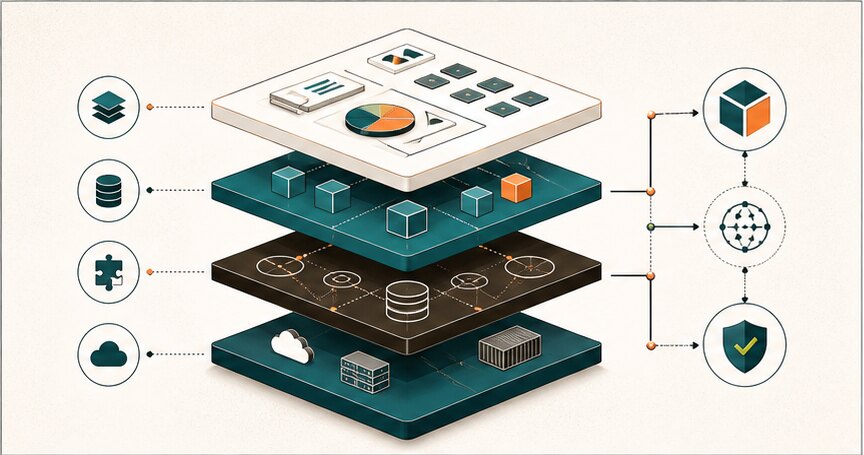
Which role does your product need?
Use the work’s main failure mode to choose.
Choose application development depth when
- Users cannot complete the main workflow cleanly.
- The product needs a native mobile or desktop experience.
- Device behavior, accessibility, or interface performance carries the risk.
- The team already has stable APIs and backend systems.
- Release quality across browsers, devices, or app stores needs ownership.
Choose broader software development depth when
- The data model or architecture is still unclear.
- Several systems must exchange reliable data.
- Permissions, audit history, payments, or security are central.
- The product has complex background workflows.
- Technical debt or reliability is slowing delivery.
- The team needs someone to own the software beyond the interface.
Bring in senior technical leadership when
- The company must choose between vendors, platforms, or architectures.
- Several developers need consistent standards and direction.
- A migration or scale problem can interrupt the business.
- The roadmap needs technical sequencing, budget decisions, and risk control.
That leadership may come from a technical lead, staff engineer, head of engineering, or a fractional CTO. Again, the title is less important than the decisions the person must own.
Skills to assess
Application developer assessment
Look for evidence that the candidate can:
- Translate a user flow into reliable application behavior.
- Work closely with product design.
- Handle validation, errors, accessibility, and edge cases.
- Use the target platform’s conventions and tooling.
- Test on real devices or supported browsers.
- Diagnose crashes and production issues.
- Explain tradeoffs to a non-technical product owner.
Ask them to walk through a feature they shipped. What happened when the network failed? How did they handle an old device, an invalid form, a partial save, or a rejected app-store build? Specific answers reveal more than a list of frameworks.
Software developer assessment
Look for evidence that the candidate can:
- Break a business problem into clear system boundaries.
- Design understandable APIs and data models.
- Protect data integrity and permissions.
- Test risky logic and integrations.
- Investigate performance with measurements.
- Make safe changes to a running system.
- Document decisions for the next developer.
Give them a small system scenario and ask what they would clarify before coding. Strong candidates ask about users, data ownership, failure recovery, scale, compliance, existing systems, and operations. They do not jump straight to a fashionable stack.
Do degrees and language lists matter?
A computer science or software engineering degree can provide useful foundations, but it is not the only route into either role. Relevant experience, judgment, communication, and evidence of maintained software matter more than a credential by itself.
Programming languages matter when the job has a specific platform or codebase. They should not replace the deeper assessment. A developer who knows the syntax but cannot test, debug, model data, or explain tradeoffs will still struggle.
Evaluate:
- Comparable products shipped.
- The candidate’s actual contribution.
- Code and system quality.
- Production support experience.
- Communication with design, product, and operations.
- Judgment when requirements are incomplete.
- Ability to learn the parts of your stack they do not know yet.
One developer or a product team?
Many products need both kinds of work. A polished app still needs reliable APIs, data, monitoring, and release operations. A sound backend still fails if the interface confuses users.
An early product may use one senior full-stack developer who can move across layers. As scope grows, clearer ownership usually helps:
- Product and user research define the problem.
- Design shapes the workflow and interface.
- Application developers own user-facing behavior.
- Backend or software developers own services, data, and integrations.
- QA protects critical workflows.
- Technical leadership manages architecture and delivery risk.
If you hire an external team, ask who owns each area instead of accepting a single promise that everyone is “full stack.” Our guide to development team structure explains how those responsibilities fit together.
Write the job around outcomes
Replace a generic title with the result you need. For example:
- Build and release the first Android booking workflow.
- Stabilize the APIs and data model behind our customer portal.
- Connect sales, operations, and billing without duplicate records.
- Reduce checkout failures and improve production monitoring.
- Lead the architecture while two product developers ship version one.
Then list the systems, constraints, and decisions the person will own. Candidates can respond to real work more accurately than a recycled list of languages and personality traits.
Hire an application developer when the main risk sits in the application experience. Hire broader software development capability when the risk crosses data, systems, and long-term operation. If both are true, design the team around both rather than hoping one job title covers everything.
If you need to scope the role and delivery work together, review Hapy’s engagements against these outcomes.