Cloud and SaaS are related, but they are not the same thing.
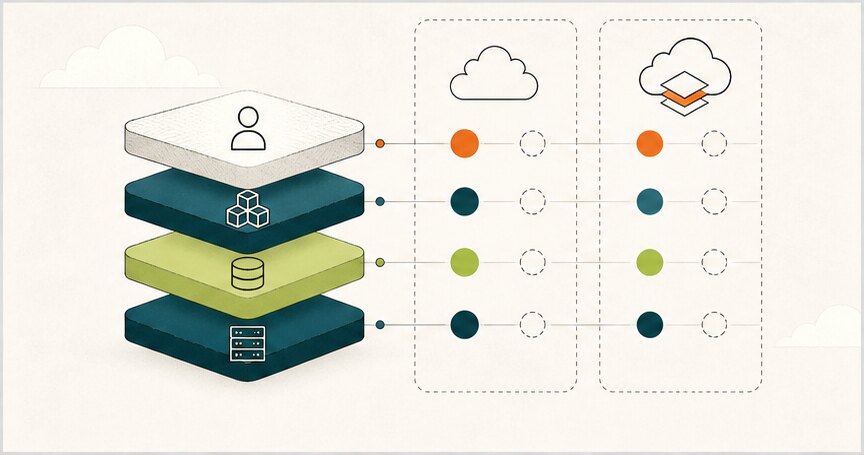
Cloud is the broader computing model. SaaS is a software delivery model that usually runs on cloud infrastructure. In plain terms, cloud is the environment; SaaS is one kind of product delivered through that environment. If you need the infrastructure layers, Hapy’s IaaS, PaaS, and SaaS guide breaks them down.
This distinction matters because business teams often use the terms interchangeably and then make unclear software decisions. Choosing a SaaS tool is different from building a cloud-based product, evaluating SaaS technology, or operating your own cloud infrastructure.
Cloud vs SaaS in plain terms
| Term | What it means | Example decision |
|---|---|---|
| Cloud | Computing resources delivered online | Where should our app, data, or infrastructure run? |
| SaaS | Ready-to-use software delivered online | Which subscription tool should our team use? |
| IaaS | Cloud infrastructure such as servers, storage, networking | How much infrastructure control do we need? |
| PaaS | Managed platform for deploying apps | Do we want faster development with less infrastructure work? |
| Custom cloud app | Software you build and host online | Does our workflow require a tailored product? |
SaaS is usually the easiest to adopt. Cloud infrastructure gives more control but requires more technical ownership.
What SaaS is good for
SaaS works well when the workflow is common and the tool is mature.
Use SaaS when:
- The process is standard
- Speed matters
- The team can adapt to the tool
- Integrations are available
- You do not need deep customization
- The vendor’s security and reliability are acceptable
- Subscription cost stays reasonable as the company grows
Examples include email, CRM, project management, accounting, support desks, analytics, and collaboration tools.
The risk is tool sprawl. SaaS is easy to adopt one tool at a time, which can create disconnected data and manual reporting later.
What cloud infrastructure is good for
Cloud infrastructure is useful when you are building or operating software that needs more control.
Use cloud infrastructure when:
- You are building a customer-facing product
- You need custom workflows
- You have specific data, security, or performance requirements
- You need deeper integrations
- You want to control architecture and deployment
- The software itself is part of your business advantage
This gives flexibility, but it also creates responsibility. Someone has to own architecture, security, deployment, monitoring, cost, and maintenance.
Build vs buy is the real decision
Most business decisions are not truly “cloud vs SaaS.” They are build vs buy vs connect.
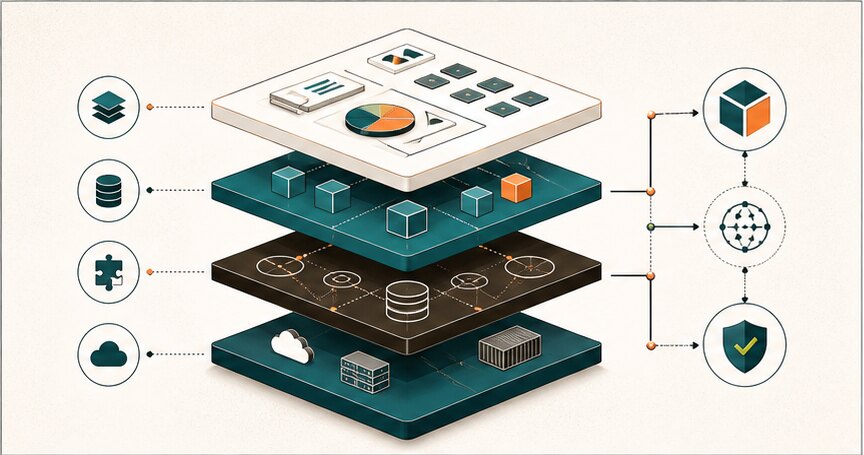
Ask:
- Is this workflow common or specific to us?
- Does a SaaS tool solve it well enough?
- Will the team adapt to the SaaS workflow?
- Are integrations strong enough?
- Is the data model strategic?
- Would custom software create real advantage?
- Who will maintain the system?
If the workflow is generic, SaaS is usually the first choice. If the workflow is central to how the business wins, a custom cloud application may be worth considering.
Cost and control tradeoffs
SaaS usually has lower setup cost and faster adoption, but the business accepts the vendor’s workflow, pricing, roadmap, data structure, and integration limits.
Custom cloud software gives more control, but the company owns more responsibility: architecture, security, monitoring, uptime, maintenance, and future development. That control is valuable only when it supports a workflow that matters enough.
The better choice is not the one that sounds more modern. It is the one whose ownership model matches the business value of the workflow.
The Hapy view
Cloud and SaaS are tools, not strategies. The right choice depends on the operating problem.
For growing businesses, the immediate need is often not a new platform. It is clearer systems, better data flow, useful dashboards, and fewer manual handoffs. That may involve SaaS, cloud software, automation, or custom development.
Hapy’s Business Systems & Automation work starts with how the business runs, then chooses the technology model that fits. SaaS is useful when it reduces drag. Custom cloud software is useful when the business needs something more specific than the market already offers.