Webflow and WordPress can both publish a professional website. They solve different operating problems, so the right choice depends on what the team needs to do after launch.
Webflow is a hosted visual platform. It can suit a design-led marketing site where the team values direct layout control, structured content, and a managed hosting boundary.
WordPress can mean the open-source software from WordPress.org or the hosted WordPress.com service. Self-hosted WordPress can suit a team that needs broad extension options, hosting choice, or deep customization and is ready to own more operational work.
The answer is therefore not “which platform wins?” The useful answer is “which platform fits the pages, publishing team, commerce model, integrations, languages, governance, and ownership model you need?”

Quick answer
| Situation | Likely starting point | Reason to verify |
|---|---|---|
| A small or mid-sized marketing site needs strong visual control and frequent landing-page work. | Webflow may fit. | Check CMS structure, editor roles, forms, integrations, plan limits, and future ownership. |
| A publishing team needs many content types, custom workflows, or a broad extension ecosystem. | WordPress may fit. | Decide between WordPress.com and self-hosted WordPress, then budget for maintenance and compatibility work. |
| The business runs complex commerce, memberships, subscriptions, or operational integrations. | Test both against the complete workflow, and include dedicated commerce options. | A page builder or CMS feature list is not proof that checkout, billing, fulfillment, permissions, and reporting fit. |
| The site is a private product or application. | Use a web application architecture, with Webflow or WordPress only where they serve public content. | Do not force application logic into a marketing site platform. |
| The team has no technical owner. | Prefer the platform with the clearest managed workflow and support agreement. | Confirm who owns updates, access, forms, analytics, security, backups, and incidents. |
This table is a starting hypothesis. Use the detailed checks below before committing.
Make the comparison fair
“WordPress” needs a qualifier. The official WordPress.org documentation describes WordPress as open-source publishing software that can be installed on a host. It describes WordPress.com as a hosted service that runs WordPress.
| Term | What it means for the decision |
|---|---|
| Webflow | A hosted visual website platform with site-level plans and separate workspace considerations. |
| WordPress.org | The open-source project, software download, documentation, and plugin directory. The site owner still chooses the hosting and operating model. |
| WordPress.com | A hosted WordPress service. The service manages more of the hosting layer, while plan and feature rules still apply. |
| Self-hosted WordPress | WordPress software operated on a host selected by the owner or their technical provider. |
Do not compare Webflow with an imagined “free WordPress” site. Compare the complete service your team will operate: platform, hosting, editing, design, extensions, security, analytics, support, content migration, and maintenance.
What Webflow optimizes
Webflow is often strongest when a team needs to move from design direction to a reviewable marketing page with few handoffs. Its visual workflow can help designers inspect responsive layouts, content patterns, and interactions in context.
The Webflow CMS can organize repeated content in collections. That can help with articles, case studies, authors, services, locations, or other content types that have a clear shared structure.
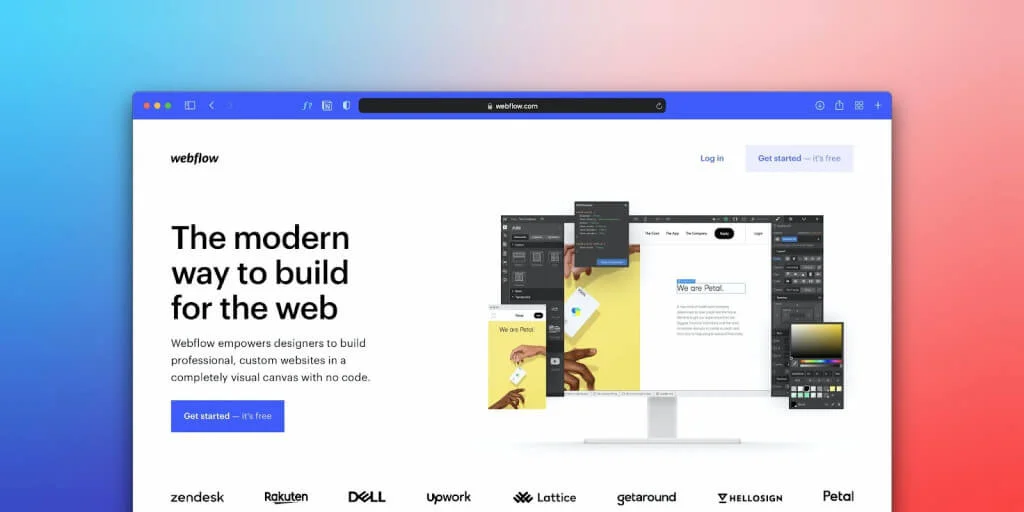
Webflow is not a complete answer for every technical requirement. Forms, CRM routing, analytics, consent, custom application logic, commerce operations, and external APIs may require code or another service. Visual editing also needs governance so repeated components, headings, metadata, scripts, and accessibility do not drift.
A hosted platform can reduce some infrastructure work. It does not remove responsibility for accounts, permissions, custom code, third-party services, content, privacy, forms, or incident response.
What WordPress optimizes
WordPress is valuable because the software can be extended and operated in different ways. The WordPress plugin documentation explains that plugins extend WordPress core and can cover areas such as forms, SEO, ecommerce, security, caching, and imports or exports.
That breadth supports many kinds of sites, but it creates choices to manage. Plugin compatibility, theme behavior, hosting quality, update timing, access control, backups, performance, and support all affect the real result.
With WordPress.com, the service manages more of the hosting layer. With self-hosted WordPress, the owner or technical provider has more control and more responsibility. A WordPress site can be simple to edit or difficult to govern depending on the theme, page builder, plugins, custom code, and publishing process.
Compare the work, not only the features
| Decision area | Webflow may fit when | WordPress may fit when | Evidence to collect |
|---|---|---|---|
| Marketing pages | Designers need direct control of responsive layouts and campaign patterns. | The site needs a theme or block system that the team already operates well. | Build one representative page with real copy, forms, proof, and mobile states. |
| Publishing | A small team uses a defined CMS model and visual editing is valuable. | Multiple authors, content types, editorial stages, taxonomies, or custom workflows matter. | Map fields, references, approvals, revisions, previews, and archive rules. |
| Ecommerce | The catalog and operations fit the selected Webflow Ecommerce plan and integrations. | WooCommerce or another WordPress commerce stack can support the required catalog and operations. | Test product, cart, checkout, payment, tax, shipping, refunds, inventory, and reporting flows. |
| Membership or application logic | The public marketing layer is separate from the private system. | Plugins or custom development can integrate with the required accounts and workflows. | Test authentication, permissions, data ownership, notifications, and failure recovery. |
| Integrations | The required services have reliable integrations or a documented custom route. | The team can maintain the needed plugins, APIs, webhooks, and custom code. | Document data direction, credentials, retries, error handling, and an owner. |
| Multilingual content | The selected Webflow setup supports the required locales, slugs, metadata, and editorial rules. | The WordPress setup supports translation workflow, locale routing, metadata, and governance. | Test translated content, internal links, language metadata, search behavior, and review ownership. |
| Governance | A small group can work with clear roles, review, and publishing boundaries. | The organization needs a mature role, revision, plugin, and editorial control model. | Run a permission test with real roles and a rollback exercise. |
| Maintenance | The team values a managed platform boundary and has limited server administration. | The team has a capable host or technical owner for updates, security, backups, and performance. | Name the owner and record the recurring tasks and response path. |
| Portability | The team accepts hosted platform dependency or has tested the export path. | The team values hosting choice and can operate the software outside one provider. | Export a representative page, content set, form, asset set, redirects, and analytics configuration. |
A capability that exists in a platform is not automatically a capability the team can operate well. Test the workflow with the people who will publish and support the site.
Marketing sites and landing pages
For a design-led marketing site, Webflow may reduce the distance between a design review and a working page. This can be useful for campaign pages, service pages, case studies, and brand sites that need frequent visual iteration.
WordPress can also support these sites through blocks, themes, page builders, or custom templates. The result depends on how the site is built and governed. A large collection of plugins and page-builder exceptions can make a simple change slow, while a disciplined WordPress system can be efficient.
Use a representative exercise:
- Create a page with the actual headline, proof, form, navigation, and mobile content.
- Ask a marketer to make a copy change without changing the layout.
- Ask a designer to reuse the page pattern for a second campaign.
- Ask the technical owner to review scripts, analytics, accessibility, performance, and rollback.
- Record the time, handoffs, defects, and training needed.
The exercise tells you more than a feature list.
Publishing teams and content operations
A blog is not automatically a publishing system. Ask how the team will create, review, update, relate, localize, archive, and repurpose content.
Webflow can work well with a small number of clear collections and a controlled visual workflow. Check field relationships, editor permissions, collection limits, localization, search, redirects, and how authors maintain content without breaking layout.
WordPress can support more varied publishing models through core features, plugins, themes, and custom development. That flexibility is useful when the team needs it. It also means that the owner must control plugin quality, compatibility, editorial permissions, backups, and updates.
A publishing comparison should include at least one complete content cycle: draft, review, preview, publish, update, link to related content, change metadata, and archive.
Ecommerce, subscriptions, and membership
Do not choose a platform for commerce from the appearance of a product page. Test the operation that happens after a visitor clicks Buy.
For Webflow, start with the current Ecommerce plan guidance and confirm whether the selected plan and connected services support the catalog, payment flow, tax, shipping, fulfillment, refunds, subscriptions, and reporting you need.
For WordPress, WooCommerce is one possible commerce layer. Review the WooCommerce documentation and test the complete stack of WordPress core, theme, plugins, host, payment provider, and operational systems.
For both platforms, record:
- Product and variant rules.
- Inventory source and update frequency.
- Payment methods and failure handling.
- Tax and shipping responsibility.
- Refunds, cancellations, and customer support.
- Subscription renewals or membership access.
- CRM, ERP, fulfillment, and analytics handoffs.
- Security, privacy, backups, and incident response.
If commerce or membership is the main business, include a dedicated commerce platform in the comparison. The Webflow vs Shopify guide can help frame that narrower question. A marketing site can remain on Webflow or WordPress while the transaction system lives elsewhere, but the boundary must be documented and tested.
Integrations and ownership
Integrations are part of the platform decision. Count every service that receives data or adds code:
- Forms and spam controls.
- CRM and marketing automation.
- Analytics, events, consent, and advertising tags.
- Booking, chat, search, calculators, reviews, and video.
- Payment, inventory, fulfillment, and customer support systems.
- Authentication, private content, and internal APIs.
For each integration, write down the source of truth, data fields, credentials, retry behavior, failure alert, privacy requirement, and owner. A platform is not a good fit if the team cannot explain how its integrations will be repaired after an update or outage.
Multilingual and governed publishing
Multilingual work is more than translating visible text. It can involve locale URLs, translated slugs, metadata, internal links, structured data, content review, and regional ownership.
A Webflow setup may support the required locales when the selected plan and workflow fit. WordPress can support different translation approaches through plugins or custom systems. In both cases, test a complete translated page and document who approves changes.
Governance also needs a named owner. Decide:
- Who can change global navigation and components.
- Who approves page-level content.
- Who can add scripts or integrations.
- How metadata and structured content are reviewed.
- How a bad change is found and reversed.
- How old pages and unused extensions are retired.
SEO: neither platform is a ranking shortcut
Neither Webflow nor WordPress guarantees rankings. Google’s SEO Starter Guide is a useful baseline for making pages understandable and useful, but the platform alone is not the strategy.
Compare the implementation:
| SEO concern | Webflow | WordPress |
|---|---|---|
| Page titles and descriptions | Available through page or CMS settings, subject to the selected setup and plan. | Available through core, theme, plugin, or custom implementation, depending on the setup. |
| URLs and redirects | Configure and test in the hosted environment and any connected routing layer. | Configure and test through the host, server, plugin, or application routing. |
| Canonicals and robots rules | Define and inspect the generated output. | Define and inspect the generated output from the actual theme, plugin, and host. |
| Structured data | Add through templates, fields, or custom code, then validate the output. | Add through the theme, plugin, or custom code, then validate the output. |
| Sitemap and internal links | Inspect the generated sitemap and page links. | Inspect the generated sitemap and page links. |
| Performance and accessibility | Test the published page with real content, scripts, and embeds. | Test the published page with the actual theme, plugins, host, and scripts. |
For a fair test, compare the same URL structure, content, metadata, internal links, form, and performance budget. Do not describe one platform as inherently more capable without examining the implementation.
Total ownership cost
A platform price is not total ownership cost. Use the same scope and calculate:
platform or hosting + domain + seats + extensions or add-ons + implementation + content migration + integrations + maintenance + security and backups + performance work + support + cost of delay
Do not copy a price from an old screenshot or a plan page into a long-lived estimate. Webflow’s pricing page and WordPress.com’s current plan guidance should be checked on the purchase date. Self-hosted WordPress also needs a hosting, support, and maintenance quote.
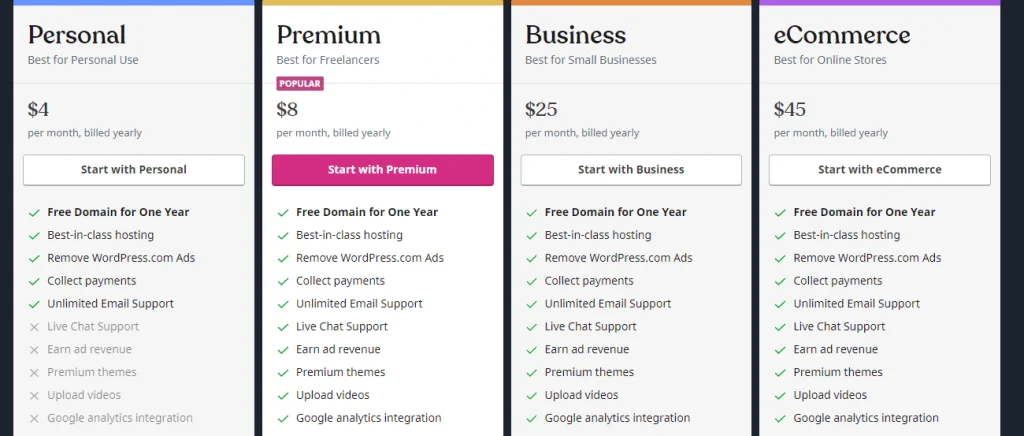
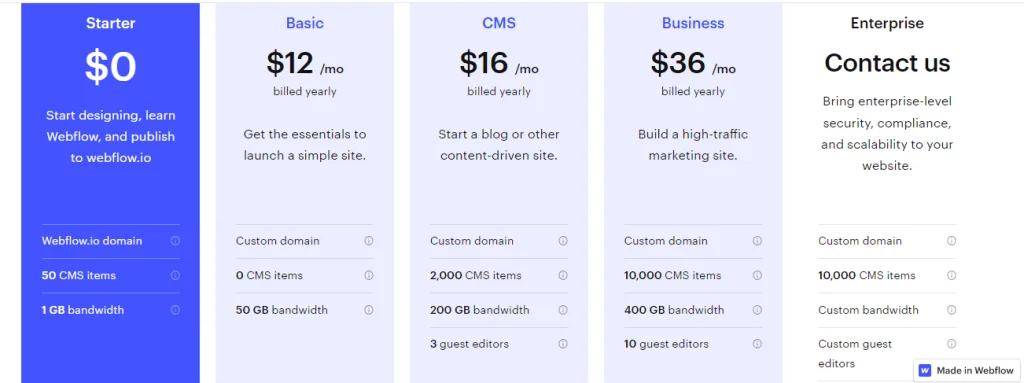
Use scenarios instead of a single “cheaper” claim:
| Scenario | Cost questions |
|---|---|
| Small marketing site | Who builds pages, who edits them, which plan hosts the domain, and which forms or analytics services are paid? |
| Publishing site | How much content entry, editorial training, metadata work, plugin or CMS maintenance, and review time will be needed? |
| Online store | What are the payment, tax, shipping, fulfillment, support, subscription, and reporting costs? |
| Membership or application | What are the identity, backend, integration, security, monitoring, and incident-response costs? |
The cheaper quote is not the cheaper system if it leaves the team with unowned work.
Migration and coexistence
A migration should protect the value already earned. Before changing platforms:
- Inventory every live URL, important landing page, content type, image, form, analytics event, redirect, and integration.
- Mark pages to preserve, improve, merge, redirect, retire, or investigate.
- Map old URLs to the closest new destination. Avoid redirect chains and unrelated homepage redirects.
- Export and validate content fields, authors, images, metadata, internal links, and structured data.
- Build the new templates and integrations in a protected staging environment.
- Test redirects, canonicals, robots rules, sitemaps, forms, analytics, accessibility, mobile behavior, and performance.
- Launch with an owner, rollback path, and a monitoring plan for traffic, crawl errors, forms, and business conversions.
A mixed setup can be reasonable when the boundaries are clear. For example, one system may serve the marketing site while another serves an application or commerce workflow. Document the URLs, navigation, analytics, authentication, data ownership, support route, and exit plan.
Choose from concrete scenarios
Choose Webflow first when
- The main site is a design-led marketing and lead-generation asset.
- Designers and marketers need frequent visual iteration.
- The content model is structured but not deeply relational.
- The team accepts hosted platform dependency.
- The selected plan and add-ons fit the actual pages, editors, locales, forms, and integrations.
- Someone owns publishing governance, security checks, analytics, and third-party code.
Choose WordPress first when
- The team needs a broad extension ecosystem or more hosting choice.
- Publishing requires varied content types, taxonomies, editorial roles, or custom workflows.
- The team has a capable host or technical owner for updates, security, backups, performance, and compatibility.
- WooCommerce or another WordPress commerce layer passes the complete operational test.
- The organization values the ability to move the software between hosts and can support that responsibility.
Test a different architecture when
- The site is really an authenticated product or internal application.
- Commerce, subscriptions, or membership operations dominate the decision.
- The content model needs strong validation and code-level reuse.
- No one can own the chosen platform after launch.
- The proposed migration is driven by fashion rather than measurable platform drag.
Decision checklist
Before approving a platform, ask:
- What are the three most important jobs the website must perform?
- Who publishes, reviews, approves, and reverses changes?
- Which content types, relationships, locales, and archive rules are required?
- Which forms, analytics, CRM, payment, identity, and operational integrations must work?
- Who owns hosting, security, backups, performance, accessibility, and incidents?
- What is the first-year cost and the recurring cost after the build team leaves?
- What must remain possible if the company changes platform later?
- Which representative page and workflow will both platforms pass before selection?
Commercial disclosure
Hapy Co provides Webflow design and development services. That commercial relationship is why the page includes a Webflow CTA. It does not make Webflow the right choice for every reader. Use the scenario tests and ownership checklist above before choosing a platform.
If Webflow fits your operating model, contact Hapy Co with your page types, publishing workflow, integrations, and constraints.
Conclusion
Webflow is often a good fit for a design-led marketing site that needs visual control, structured content, and a managed hosting boundary. WordPress is often a good fit for teams that need broader extension choices, hosting flexibility, or varied publishing workflows and can own the resulting maintenance.
Neither choice wins by default. Decide from the work the team must perform every week, the risk it must manage, and the system it must still be able to operate when the original build team is gone.