Choose a CMS by testing how your team will create, review, publish, and maintain real content. The right system fits the authoring workflow, content model, integrations, and operating budget. A popular brand or long feature list is not enough.
A content management system manages content. A website CMS also provides, or connects to, the templates and delivery system that publish it. Some products bundle editing and hosting; a headless CMS supplies content to a separate frontend. Neither model eliminates implementation and maintenance work.
1. Define the publishing job
List the content types, owners, edit frequency, approval steps, languages, and channels. Include articles, service pages, case studies, landing pages, pricing, assets, and content reused in several places.
Ask actual editors to describe a recent change. Where did they need help? Was the problem authoring, preview, approval, deployment, or an unclear content model? Fixing that workflow may be cheaper than migrating.
2. Separate content structure from page design
Define fields and relationships before choosing a builder. An article might need title, author, dates, category, body, image, and description. A case study may need client approval, evidence, and reusable service references. Decide which fields editors control and which belong to templates.
A visual editor can help with page assembly, but unrestricted layouts may create inconsistent pages. A structured editor can improve consistency, but may frustrate a campaign team that needs frequent layout changes. Test the actual task rather than assuming either model wins.
3. Compare a small set of approaches
This is a scenario shortlist, not a current product ranking. Confirm plan and version details in a trial.
| Situation | Candidate approach | Primary evidence and test |
|---|---|---|
| Familiar publishing dashboard, articles and pages | WordPress | Its feature documentation covers drafts, scheduling, revisions, roles, media and extensibility. Test your templates and required plugins together. |
| Technical writers comfortable with repository review | Repo-authored content with schema validation | Astro collections can load and validate structured content. Test the editor’s publishing and preview path. |
| Editors need a separate dashboard feeding multiple frontends | Headless CMS | Trial your required roles, localization, preview, API, export, and content relations; do not assume every plan includes them. |
| Commerce operations dominate the site | Commerce-first platform with content features | Test catalog, checkout, inventory, returns, and content needs as one workflow. |
| Internal collaboration and document publishing | SharePoint or a document-focused system | Microsoft’s SharePoint introduction describes collaboration and intranet use; assess it against that job rather than assuming a public marketing-site replacement. |
References checked September 8, 2026. If using Astro, a headless CMS can feed a collection loader; they are not mutually exclusive layers. See what belongs in repo files versus a CMS.
A plagiarism checker, desktop publishing tool, digital asset manager, or CRM may complement a CMS but should not be shortlisted as a website CMS without demonstrating the required publishing workflow. A DAM manages reusable media; a CRM manages customer relationships; document management and enterprise content management address broader information workflows. Product labels overlap, so test scope explicitly.
4. Prove integrations and compatibility
Inventory identity, forms, CRM, search, analytics, commerce, media, and data sources. For each, document the source of truth, API or connector, authentication, rate limits, failure state, and maintenance owner.
An existing database does not by itself determine the CMS operating system. Verify the supported driver, API, export/import path, network access, and deployment requirements for the chosen versions. Ask the technical team to prove a representative read or write in a safe environment before committing.
5. Run the same editor trial on each candidate
Give an editor a real draft and a realistic task list:
- Create an article with an author reference, image, and metadata.
- Preview it at mobile and desktop sizes without publishing it publicly.
- Submit it for review and verify that an unauthorized role cannot publish.
- Schedule or publish it, then correct a mistake and restore an earlier version.
- Reuse content in another page or locale where required.
- Export the content, references, and media and inspect whether another system can use them.
Record task completion, errors, assistance required, publishing delay, and missing capabilities. Choose weights before the trial; treat required permissions, export, and workflow functions as gates rather than points that attractive design can offset.
6. Verify SEO, accessibility, and measurement
Check rendered titles, descriptions, canonical URLs, headings, internal links, image alternatives, sitemap behavior, redirects, and index controls. A plugin score does not prove rankings or content quality. The system should support clear URLs and metadata without forcing keyword stuffing or unnecessary text.
Test the site with keyboard navigation and representative assistive-technology checks, including templates and third-party components. Review script and image weight on real pages. Analytics may be built in or integrated; validate events, consent behavior where applicable, and the reporting owner rather than migrating solely for a dashboard.
7. Assign security and operating responsibilities
No CMS guarantees secure data. Hosting, dependencies, authentication, roles, secrets, uploads, integrations, logging, patching, backups, and recovery all need owners. HTTPS protects transport; a CDN distributes content; neither establishes complete application security.
For WordPress, the official hardening guide provides deployment-specific responsibilities. Ask any provider which controls it manages and which remain with you. Test restoration from backup instead of treating a backup schedule as proof of recoverability.
8. Compare total cost and the exit path
Include licenses, editor seats, environments, API or traffic usage, plugins, hosting, implementation, training, support, and internal maintenance. Price your actual roles and volumes with a dated quote. Check license restrictions on themes, plugins, and reusable code with the appropriate reviewer.
Record who controls the domain, repository, hosting, data, and billing accounts. Ask what happens when a plugin is abandoned, a provider changes pricing, or the agency relationship ends. An export button is useful only if exported data retains the fields and relationships you need.
9. Rehearse migration before switching
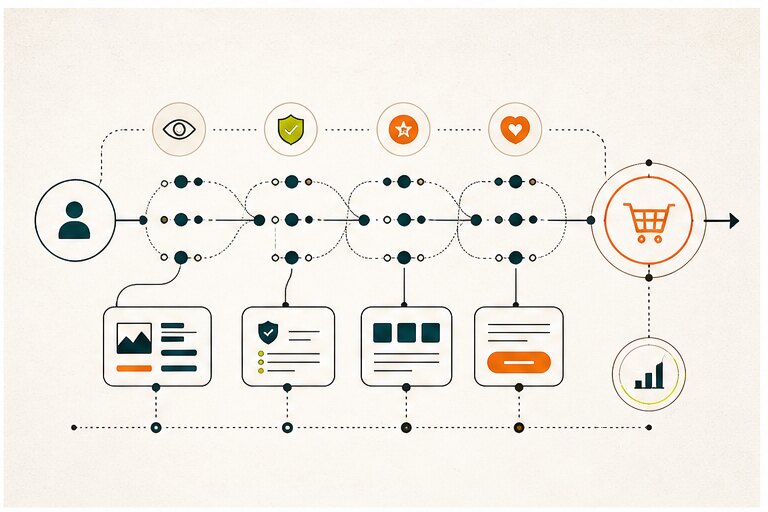
Inventory URLs, content types, metadata, media, forms, redirects, and business-critical integrations. Take recoverable backups, map old fields to new ones, and import a representative sample including difficult cases. Compare counts, relationships, images, authors, and rendered pages.
Preserve URLs where possible. For changed URLs, verify the intended server response and destination in the deployed environment. Test forms, analytics, search, permissions, and editor workflow on staging. Define content-freeze or delta-sync handling, launch ownership, rollback criteria, and post-launch monitoring.
A useful pilot might migrate one article type, one service page, and one form before the whole site. That is an illustrative scope, not a promise that every migration is small. Use the website migration audit to plan the evidence.
Choose the smallest system that satisfies the publishing and operating requirements. If the current CMS can pass those tests with focused cleanup, keeping it may be the better decision. Review Hapy’s engagement options if you need help defining the comparison.