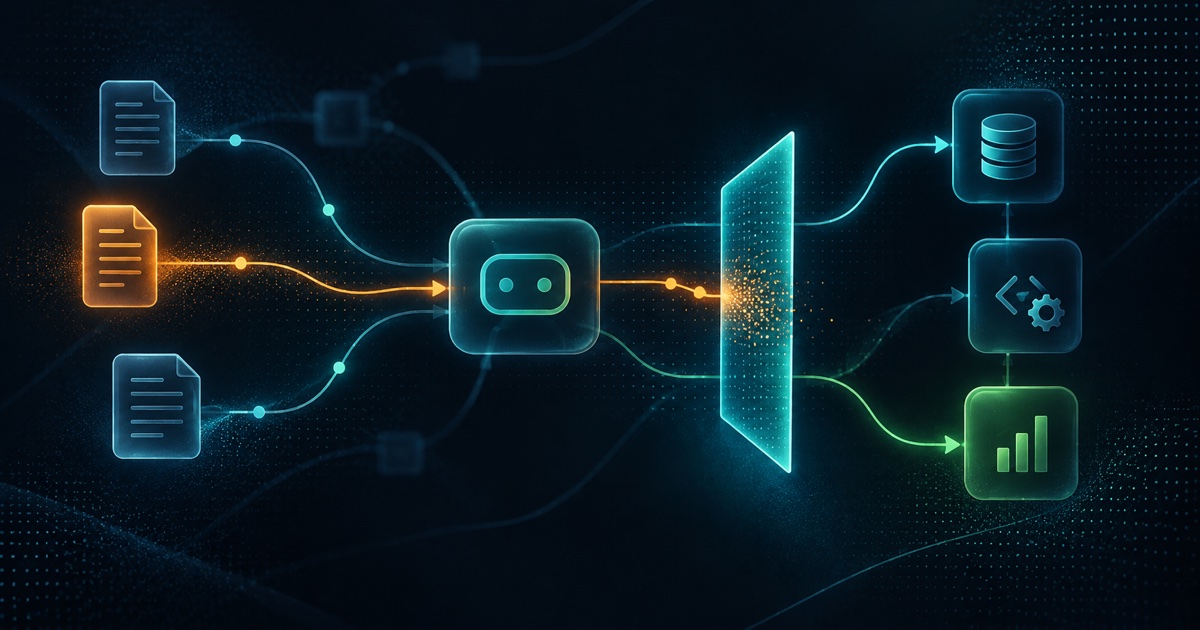
Customized software is built around the way a specific business works. Good examples include internal dashboards, customer portals, logistics systems, approval workflows, self-service kiosks, financial platforms, healthcare portals, and industry-specific mobile apps.
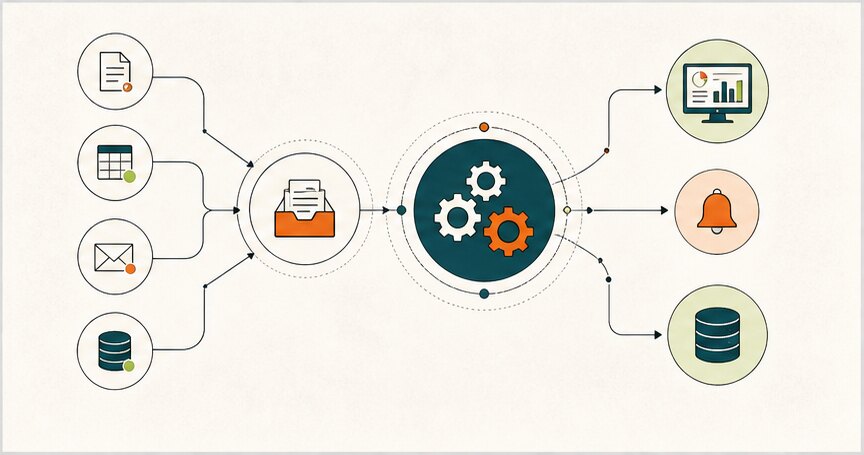
The point is not to build custom software for everything. The point is to build it where the business needs a workflow, data model, customer experience, or operating system that generic SaaS cannot support well enough.
These are illustrative use cases, not claims about implemented Hapy projects or measured customer results. This article is a decision guide. The examples matter only if they help you decide whether a custom build is justified, what the first useful version should include, and where a cheaper SaaS or no-code option would be enough.
What is Custom Software?
A customized software solution is software designed, built, deployed, and maintained around a specific business need. It may be a customer-facing product, an internal system, an automation layer, an integration between tools, or a platform that becomes part of the company’s core operations.
Custom software development services usually cover discovery, workflow mapping, product strategy, UX/UI design, engineering, integrations, testing, deployment, maintenance, and iteration. The work should start with the business problem, not the feature list.
If you are comparing options in 2026, examples are only useful when they lead to a build decision. Use them alongside a realistic custom software development cost estimate, the common types of enterprise applications, and the main software development risks that can change scope.
When custom software development services make sense
Custom software is worth considering when the work is important enough that generic tools create drag. A startup may need a product MVP that proves a new business model. A growing company may need an internal system that removes spreadsheets, manual handoffs, and reporting gaps. An enterprise may need a custom integration layer across finance, operations, sales, and support.
Good reasons to choose custom software include:
- The workflow is specific to how the business creates value.
- Existing SaaS tools require too many workarounds.
- Teams are copying data between systems every day.
- Customers need a branded, role-specific, or self-service experience.
- Operations depend on spreadsheets, email approvals, and manual reporting.
- The business needs better visibility into status, cost, quality, or exceptions.
- The software can become an asset, not just an expense.
Bad reasons include wanting custom software because it sounds more premium, replacing a perfectly good SaaS tool without a business case, or building a platform before the workflow is proven.
Custom software for startups vs internal systems
Custom software for startups often focuses on product-market risk: build the smallest useful product, test real behavior, learn from the market, and avoid overbuilding before there is evidence.
Custom internal systems focus on operating risk: reduce manual work, make information visible, create better handoffs, improve reporting, and help the team scale without adding the same amount of headcount.
| Use case | What the software should prove |
|---|---|
| Startup MVP | Users understand the value and complete the core workflow. |
| Customer portal | Customers can self-serve without creating support burden. |
| Internal dashboard | Teams can see status, exceptions, and decisions in one place. |
| Workflow automation | Repetitive handoffs happen consistently without manual chasing. |
| B2B ordering system | Customers can reorder, manage accounts, and reduce sales admin. |
| Integration layer | Data moves between tools without duplicate entry or unreliable exports. |
If your main problem is operational drag rather than a new product, compare these examples with Hapy’s business systems automation work. The right solution may be a custom dashboard, integration, or workflow tool rather than a large standalone product.
What these custom software examples have in common
The strongest custom software examples usually share three traits:
- The workflow is specific. The business cannot simply copy a generic SaaS process without losing speed, accuracy, or differentiation.
- The data model matters. The software needs to connect customers, orders, assets, payments, approvals, inventory, locations, or support cases in a way the business can trust.
- The product changes behavior. The system is not just a digital form. It reduces manual work, creates visibility, improves customer experience, or lets the company sell in a new way.
That is the standard Hapy would use before recommending a custom build. If the workflow is common, buy SaaS. If the workflow is important and specific, design the software around the business.
15 practical examples of customized software
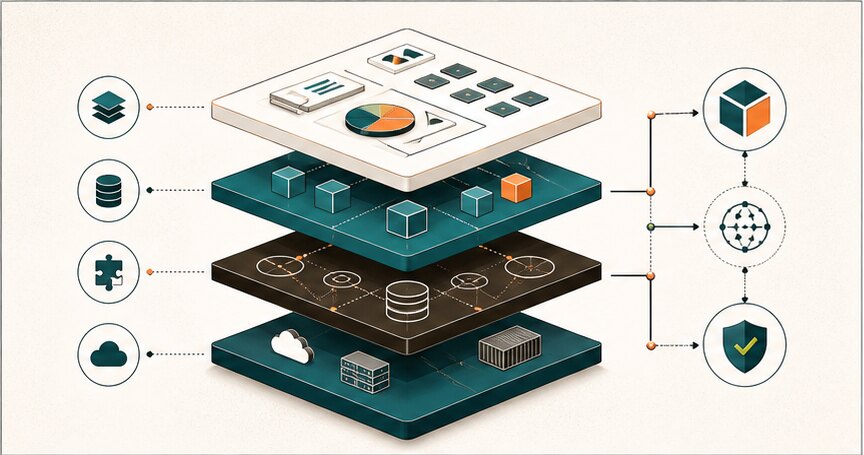
The most useful custom software examples are not famous apps. They are specific systems that make work easier to run, measure, and improve. Use these examples to spot the kind of workflow where a custom build may be justified.
| Example | What it does | When custom makes sense |
|---|---|---|
| Customer portal | Lets customers view orders, documents, invoices, appointments, support status, or account details | The customer journey depends on industry-specific records, permissions, or service steps |
| Operations dashboard | Shows live work status, exceptions, owners, due dates, and next actions | Leaders cannot trust spreadsheet reports or static BI dashboards |
| Approval workflow | Routes purchases, refunds, access requests, content, quotes, or exceptions through review | Decisions need audit history, permissions, escalation rules, or compliance evidence |
| B2B ordering system | Lets account customers reorder, manage catalogs, see contract pricing, and handle shipping rules | Sales teams spend too much time processing repeat orders manually |
| Inventory or asset system | Tracks stock, locations, serial numbers, maintenance, movement, and exceptions | Off-the-shelf inventory tools cannot match the physical workflow |
| Field service dispatch board | Assigns jobs, routes teams, tracks parts, captures photos, and updates customers | Work changes throughout the day and needs a live operating view |
| Support console | Combines tickets, customer history, billing, product events, and internal actions | Agents need context from several systems before helping a customer |
| Finance reconciliation tool | Matches payments, invoices, refunds, fees, payouts, and exceptions | Manual reconciliation creates errors, delays, or reporting gaps |
| Partner or vendor portal | Gives outside partners controlled access to orders, tasks, documents, or status | Email and shared sheets are creating version-control or access problems |
| Learning or student portal | Manages enrollment, course material, attendance, grades, payments, and communication | The institution has a workflow that generic LMS tools do not fit |
| Patient or client portal | Lets users book appointments, submit forms, review records, and communicate securely | Privacy, permissions, and operational flow need a tailored experience |
| Ecommerce operations layer | Handles returns, subscriptions, fulfillment rules, product data, or warehouse handoffs | Shopify, ERP, shipping, and support tools need one business-specific layer |
| Internal admin panel | Lets staff safely create, update, review, or deactivate business records | Teams need controlled access without touching the database or asking engineers |
| Integration monitor | Tracks API syncs, failed jobs, stale records, and downstream alerts | The business depends on several tools sharing data reliably |
| Custom reporting system | Turns operational data into dashboards, alerts, and decision queues | Reports must reflect company-specific metrics, margins, or exception logic |
These examples overlap with internal tools, enterprise applications, and automation systems. That is normal. A custom software project usually becomes valuable when it owns the operating layer between people, data, decisions, and the tools the company already uses.
Custom software examples by department
Custom software is easier to evaluate when you start from the team that feels the pain.
| Department | Customized software examples | Better first question |
|---|---|---|
| Sales | B2B ordering portal, quote builder, account dashboard, renewal workflow | Which sales steps are too specific for the CRM alone? |
| Operations | Dispatch board, production tracker, inventory exception queue, capacity planner | Which daily handoffs are invisible until something is late? |
| Support | Customer support console, escalation workflow, refund approval tool | What context do agents keep hunting for across systems? |
| Finance | Reconciliation dashboard, approval workflow, billing exception tracker | Which financial checks still depend on manual exports? |
| Logistics | Route planner, shipment exception board, driver app, warehouse handoff tool | Where does status change faster than the current tools can show? |
| Management | KPI dashboard, operating review tool, decision log, risk tracker | Which decisions are slowed by stale or fragmented data? |
For Hapy clients, this is often where Business Systems & Automation becomes more relevant than a large product build. The first step may be connecting the current tools, cleaning the workflow, and building one focused internal layer before approving a bigger platform.
When each example should be custom vs SaaS or no-code
Do not build custom software just because the workflow is annoying. Build when the workflow is important, recurring, specific, and poorly served by available tools.
| Situation | Use SaaS | Use no-code or low-code | Build custom software |
|---|---|---|---|
| Standard workflow | Payroll, basic accounting, simple CRM, email marketing | Lightweight forms, simple automations, temporary trackers | Usually not worth it |
| Early experiment | Use a tool if it proves the need quickly | Good fit when the process is still changing | Build only the thin slice that proves the product or workflow |
| Growing operational workflow | Use SaaS if the default process is close enough | Good for simple approvals, forms, and dashboards | Build when permissions, data model, integrations, or exception handling matter |
| Strategic customer experience | Use SaaS for commodity parts like payments or email | Useful for prototypes and internal admin | Build when the customer experience is core to differentiation |
| Integration-heavy work | Use native integrations if they are reliable | Good for simple syncs and notifications | Build when data accuracy, auditability, or failure handling is critical |
| Regulated or high-risk workflow | Use mature specialist tools where possible | Use cautiously and with governance | Build only with clear ownership, security, testing, and maintenance |
If you are still deciding whether ownership is worth it, compare the example against Hapy’s build vs buy software framework and the realistic custom software development cost drivers. The expensive mistake is not choosing SaaS. It is forcing an important workflow through a tool that was never designed for how the business actually works.
How to choose a custom software development company
The right custom software development company should help you reduce uncertainty before it writes a lot of code. Look for a team that asks how the business works, which workflow matters first, what data must move between systems, how success will be measured, and what should stay out of scope.
Useful questions to ask before hiring:
- What business outcome is this software supposed to improve?
- Which existing tools should be kept, replaced, or integrated?
- Who will use the system every day, and what do they need to do faster?
- What data has to be accurate, permissioned, and reportable?
- What is the smallest useful version that can prove the investment?
- How will the product be maintained after launch?
A good partner should be comfortable saying when SaaS, no-code, or a smaller automation is enough. Custom software is strongest when it solves a real operating problem, not when it recreates a generic tool at a higher cost. If you are still choosing the build path, compare no-code, AI code tools, and custom software before committing.
Types of custom software development
Most custom software projects fall into four practical groups:
| Type | What it usually includes | Watch out for |
|---|---|---|
| Custom product development | Customer-facing web apps, mobile apps, SaaS platforms, marketplaces, or portals | Building too much before demand is proven |
| Custom internal systems | Admin panels, dashboards, approval workflows, dispatch boards, and reporting tools | Recreating a messy process instead of simplifying it first |
| Custom automation and integration | API connections, workflow automation, data sync, AI-assisted routing, and system monitors | Brittle middleware with no owner or failure path |
| Custom ecommerce and service operations | Product data tools, order flows, returns, subscription logic, partner portals, and fulfillment dashboards | Treating every edge case as a version-one requirement |
The type matters because it changes the first version. A startup product should prove demand. An internal system should remove a bottleneck. An integration layer should make data trustworthy. An ecommerce operations tool should reduce the cost and confusion behind the storefront.
That is the simplest way to keep custom software practical: define the operating problem first, then build the smallest durable system that makes that problem easier to run.
Conclusion
Customized software is useful when it gives the business a better way to operate, serve customers, move data, or test a new product idea. The best examples are not custom for the sake of being custom. They are tied to a workflow where generic tools create delay, confusion, duplicate effort, or a weaker customer experience.
If the system can create clearer operations, faster decisions, or a product experience competitors cannot easily copy, custom software may be worth the investment. If the workflow is common and well served by existing SaaS, start there and save custom development for the work that actually differentiates the business.