A part-time CTO can fit a company that needs recurring senior technology decisions but does not need a full-time executive workload. The arrangement works only when available hours, authority, delivery ownership, and urgent coverage are explicit.
Start by listing the decisions that are stalled: architecture, vendor selection, security priorities, hiring, delivery quality, or investment sequencing. If the primary gap is coding capacity or daily team management, a developer or engineering manager may be the more direct hire.
Part-time, fractional, interim, and advisory roles
These terms are used differently by providers. Part-time usually describes limited working hours. Fractional often describes sharing an executive across companies. Interim describes a temporary appointment and may be full-time or part-time. An advisor may recommend decisions without authority to direct staff or approve changes.
The title does not establish expertise or scope. A fractional leader can be highly experienced, and a full-time leader can have gaps. Specify the actual mandate and availability in the agreement.
| Arrangement | Useful question |
|---|---|
| Part-time or fractional CTO | Which recurring decisions and leadership duties fit within the allocated hours? |
| Interim CTO | What must be stabilized or transferred before the appointment ends? |
| Technical advisor | Who turns advice into decisions and implementation? |
| Full-time CTO | Does the company have enough continuous executive work to require dedicated availability? |

Situations where the model can fit
A non-technical founder may need an independent review of a build proposal and ongoing oversight of a delivery partner. An established business may need an architecture roadmap, vendor assessment, or mentorship for an internal technical lead. A company replacing its CTO may need temporary continuity while recruiting.
Each case still needs people who implement decisions. A few leadership hours do not replace product ownership, engineering execution, QA, and production support. Discuss those responsibilities before setting the retainer.
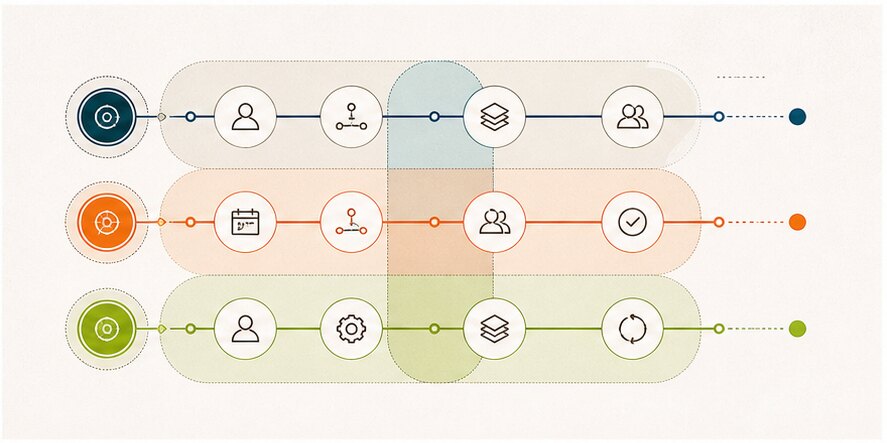
Use an availability and authority scorecard
Complete this together before hiring. Treat missing coverage as a staffing problem rather than an informal expectation.
| Area | Write down | Evidence of a workable arrangement |
|---|---|---|
| Weekly availability | Reserved hours, overlap windows, and days unavailable | Calendar that fits key reviews and decisions |
| Decision rights | What the CTO recommends, approves, or escalates | Written matrix for architecture, spending, hiring, and releases |
| Delivery ownership | Who assigns work and follows progress daily | Named engineering and product owners |
| Urgent issues | Response expectations and backup coverage | Incident contact tree with a responsible responder |
| Access | Repositories, systems, records, and least-privilege rules | Company-owned accounts and approved access |
| Conflicts | Other clients and confidentiality boundaries | Disclosed conflicts and a workable mitigation |
| Continuity | Notes, handoff, termination, and successor support | Runbooks and a decision log another leader can use |
The CEO or board retains company-level authority according to the actual governance arrangement. A CTO does not automatically control all company finances. Agree spending limits and which commercial commitments need approval.
Compare cost using hours and scope
A generic full-time CTO salary is not a part-time consulting rate. Employment costs, consulting overhead, location, specialist risk, and availability differ. Ask for a dated proposal with included hours, deliverables, out-of-scope rates, expenses, and cancellation terms.
Here is a hypothetical September 2026 planning example, not a market benchmark or Hapy quote. Eight hours per week at an assumed $200 per hour equals $1,600 per week. A four-week engagement costs $6,400. At the same cadence for 52 weeks, the annual total is $83,200, averaging about $6,933 per calendar month. A four-week period and an average calendar month are different denominators.
A monthly retainer might instead reserve a fixed number of hours and specified decisions. State whether unused hours expire, whether urgent calls consume the allowance, and whether additional work requires approval. Compare total expected spend and coverage with the full-time option, not hourly price alone.
Hire for relevant judgment
Review comparable work and ask what the candidate personally owned. A useful discussion covers an architecture tradeoff, a failed delivery assumption, a difficult hiring decision, and how the person handled an incident or vendor transition. Verify references with permission and distinguish advice from accountable delivery.
Use a bounded paid assessment where appropriate: review a system, identify the most consequential risks, and propose a prioritized action plan. Assess clarity, evidence, and practicality. Neither a degree nor a fixed number of years proves fit for the mandate.
Define the first engagement
For an illustrative six-week assessment and oversight engagement, the deliverables might be a system inventory, prioritized risk register, architecture decision notes, delivery review cadence, hiring recommendations, and a transition plan. Assign implementation owners and track whether the highest-priority decisions actually move.
Review the arrangement against outcomes: reduced decision delays, accepted plans, resolved ownership gaps, and tested operational controls. Do not substitute meeting attendance or document volume for progress. Extend, reshape, or end the engagement based on the remaining workload.
When part-time coverage is insufficient
Consider dedicated leadership when daily executive coordination exceeds the available hours, several engineering teams need active management, a major incident or turnaround requires sustained attention, or strategic decisions repeatedly wait for the CTO’s next session.
Sensitive systems may require additional security, privacy, or domain specialists regardless of the CTO’s schedule. If urgent responsibilities have no qualified backup, increasing the retainer alone may not solve the coverage gap.
For a broader comparison, see fractional CTO rates and startup risk. Hapy’s engagement options can help frame a scoped discussion about the leadership and delivery work the business needs.