Cloud ERP software gives businesses a shared system for operations, finance, inventory, procurement, HR, reporting, and other core functions.
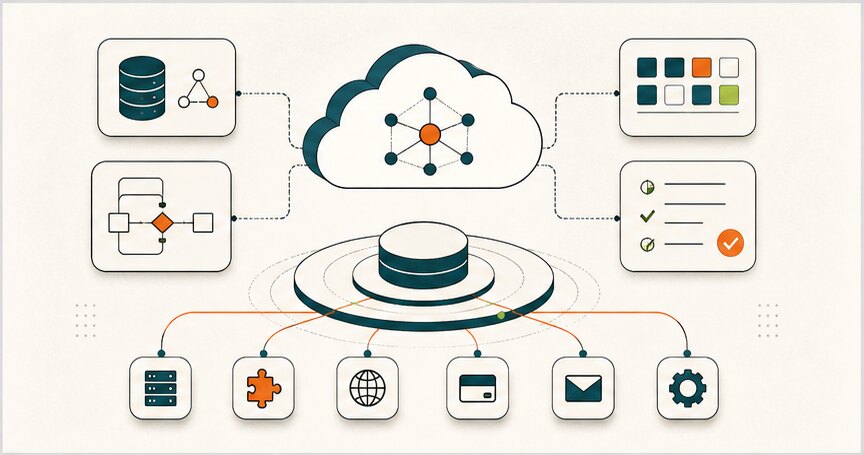
The benefit of cloud ERP is not simply that it runs online. The benefit is that teams can work from one operating system instead of scattered tools, spreadsheets, and disconnected data.
But ERP software is also easy to overbuy, especially when a company has not separated its operating needs from generic SaaS business model assumptions. A powerful system will not fix unclear processes, weak data ownership, or a team that does not know how work should flow.
What cloud ERP software does
ERP stands for enterprise resource planning. A cloud ERP moves that system to an online platform, usually managed by a vendor and accessed through a browser or app. If the terminology is confusing, start with the difference between cloud and SaaS before comparing ERP vendors.
Common modules include:
- Finance and accounting
- Procurement
- Inventory
- Sales and order management
- Manufacturing or operations
- HR and payroll
- Projects
- Reporting and analytics
- Compliance and audit workflows
The promise is a shared source of truth. Instead of each department keeping separate records, the business can see connected data across the operation.
Cloud ERP benefits
Cloud ERP can help when a company has outgrown manual systems or disconnected tools.
Common benefits include:
- Better visibility across departments
- Easier access for distributed teams
- Reduced local infrastructure burden
- More consistent reporting
- Shared workflows and approvals
- Faster vendor-managed updates
- Stronger permission and audit controls
- Better planning across inventory, finance, and operations
These benefits depend on implementation quality. A cloud ERP only creates clarity if the business defines what needs to be clear.
Cloud ERP risks
ERP risks include operational readiness, migration accuracy, service reliability, access controls, and contract terms.
Watch for:
- Migrating messy data into a new system
- Customizing too much too early
- Choosing software before clarifying process
- Underestimating training and adoption
- Integrations that are harder than expected
- Reporting that does not match leadership decisions
- Teams continuing to run side spreadsheets
- No clear internal owner after implementation
If people do not trust the ERP, they will work around it. That is how companies end up with both an expensive platform and the same old manual reporting problem.
Cloud ERP vs custom business system
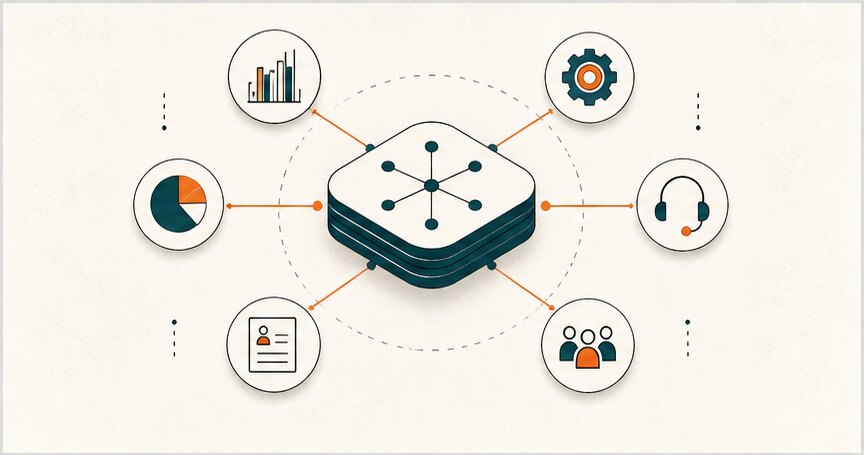
Cloud ERP is not always the right answer. Sometimes a business needs lighter workflow automation, better dashboards, or custom internal software that connects the tools it already uses.
| Option | Best when |
|---|---|
| Cloud ERP | Core business processes are mature enough to fit a structured operating system |
| Custom internal system | The workflow is specific and creates strategic advantage |
| Automation and dashboards | Existing tools are mostly fine but visibility and handoffs are broken |
| SaaS stack cleanup | The business has too many tools but no single clear owner |
Before choosing ERP, ask whether the business needs a full operating platform or a clearer system around a few critical workflows.
If the choice is between a full ERP and a narrower operating layer, compare custom ERP development vs internal tools before committing to the heavier platform.
Questions to ask before implementation
Before implementing cloud ERP, define:
- Which process is most painful today?
- Which data is unreliable?
- Who owns each workflow?
- What reports are used for decisions?
- Which tools need to integrate?
- Which processes should change before software is configured?
- How will users be trained?
- What will be measured after launch?
These questions matter more than a feature checklist.
Test the vendor with your own workflow
Give each shortlisted vendor the same sanitized scenario: create a purchase order, receive a partial shipment, handle a price mismatch, approve an invoice, and reconcile inventory and the financial record. Include a duplicate import and a user who should be unable to approve their own request. Record what works through configuration, what needs custom code, and what remains manual.
Use a simple scorecard: demonstrated, contractually committed, or unproven. A sales statement should not receive the same status as a tested workflow.
| Evaluation area | Evidence to request before committing |
|---|---|
| Workflow fit | A recorded demonstration using your exceptions, roles, reports, and integration boundaries |
| Migration accuracy | Trial import with record counts, opening balances, inventory quantities, rejected rows, and reconciliation signed off by the relevant business owner |
| Total cost | Implementation, licenses by role or module, integrations, data cleanup, training, support, upgrades, storage, overages, and exit assistance over a common evaluation period |
| Access and audit | Demonstrate least-privilege roles, authentication options, approval separation, account removal, and an exportable history of sensitive changes |
| Data location and service terms | Identify hosting regions, subprocessors, support access, retention, incident notification terms, and responsibilities in the proposed contract |
| Availability and recovery | Read the SLA exclusions and remedies; request recovery time and data-loss objectives, backup scope, restore-test evidence, and a plan for operating during an outage |
| Exit | Export a sample of records, attachments, relationships, and audit history into usable formats; confirm export fees, access after termination, deletion timing, and migration support |
These are buyer verification questions, not a claim that any cloud ERP automatically meets a security or regulatory standard. Have the people responsible for finance, security, and applicable legal obligations review the evidence for your locations and data.
Set acceptance and exit criteria
Before signing, agree which unresolved gaps would prevent purchase or launch. For example: no go-live while opening balances do not reconcile, a critical integration lacks an owner, or ordinary staff can bypass required approvals. Set tolerances with the relevant business owner rather than accepting a generic accuracy percentage.
Choose a limited rollout, retain a usable legacy export, and rehearse recovery. Track both adoption and business accuracy during the pilot. A vendor that cannot demonstrate a usable export or explain restoration responsibilities introduces a risk that should be resolved before core operations depend on it.
What readiness looks like
Cloud ERP readiness does not mean every process is already perfect. It means the business has enough clarity to configure the system around real work instead of guessing.
Signs of readiness include clear process owners, known reporting needs, agreement on source-of-truth data, leadership support, and a team that can participate in implementation without treating it as an IT-only project.
If those pieces are missing, it may be better to clean workflows and reporting first.
The Hapy view
Cloud ERP can be powerful, but it should not be the first move for every messy operation.
Sometimes the better first step is to clean inputs, define metrics, connect tools, and build dashboards around the way the business actually runs. That is the purpose of Hapy’s Business Systems & Automation work.
The right system is the one your team will trust, use, and improve. Cloud ERP is one possible answer. Clearer operations are the real goal.