A product is easier to use when the team understands who will use it, what they are trying to do, and the conditions around that work. User-centered design (UCD) makes those questions part of product decisions instead of treating user feedback as a final approval step.
UCD does not remove uncertainty or guarantee a successful outcome. It gives the team a repeatable way to learn, make requirements explicit, evaluate design decisions, and change direction while the cost of change is still understood.
This guide explains what UCD is, how to choose a method for a research question, how to recruit and protect participants, and how to turn a finding into a design change.
One cycle, repeated throughout delivery
For teams with an existing SaaS or MVP, a focused UX audit can be the more practical next step because it connects usability evidence to product, conversion, and rebuild decisions.
What is user-centered design?
User-centered design is an approach to product development that keeps users, their tasks, and their context in view throughout the work. A team learns about the people affected by a decision, turns that learning into requirements, produces a design, and evaluates whether the design supports the intended task.
The cycle is iterative. It is not a fixed five-stage delivery plan, and it does not end when a prototype is approved. A team may return to context, requirements, or design whenever new evidence changes what it understands.
If a formal reference is needed, use ISO 9241-210:2019, which covers human-centered design principles and activities across the life cycle of interactive systems. The older ISO 13407 reference in legacy UCD material should not be presented as the current standard.
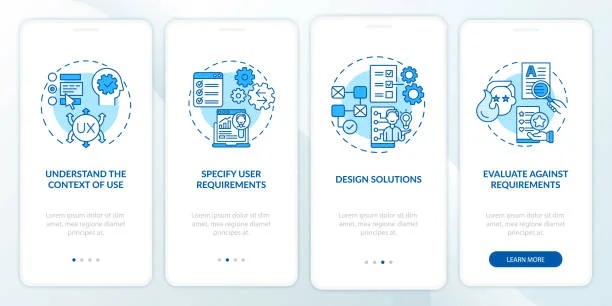
Four recurring activities
| Activity | Practical question | Typical output |
|---|---|---|
| Understand the context of use | Who will use the product, for what goal, and under which conditions? | Observations, interview notes, workflow maps, and context constraints |
| Specify user requirements | What must people and the business be able to do? | Prioritised needs, measurable usability goals, and acceptance conditions |
| Produce design solutions | Which flows, structures, and interaction patterns could meet those requirements? | Sketches, wireframes, prototypes, and content or interaction decisions |
| Evaluate the design | Can representative users complete the important tasks, and what blocks them? | Findings, evidence, severity, and changes to test next |
No method is automatically cheap, expensive, statistical, or representative. Cost, sample, and output depend on the question, recruitment, study design, and analysis. Choose the method that can answer the decision the team needs to make.
Choose a method by the question
| Research question | Methods to consider | Useful output | Main limitation |
|---|---|---|---|
| How do people work today, and what constraints shape the task? | Interviews, contextual inquiry, diary study, workflow observation | Goals, language, exceptions, and environmental constraints | Self-report can differ from behaviour in context |
| Which terms or categories make sense to people? | Card sorting, interviews, focused discussion | Candidate labels and information structures | It does not prove that users can complete a task in the final interface |
| What do people think about a concept or problem? | Interviews, questionnaires, focus groups | Themes, attitudes, and questions to explore | Opinions are not evidence of task success or future demand |
| Can people complete an important task with a design? | Moderated or unmoderated usability testing | Observed paths, errors, assistance, and task outcomes | A small exploratory study should not be reported as a population rate |
| Which of two designs supports the task better? | Comparative usability testing or a controlled experiment | Predefined differences in behaviour or preference | The result depends on equivalent tasks, suitable participants, and a clear measure |
| How can users and the team create possible solutions together? | Participatory design workshops | Concepts, sketches, and shared language | Workshop output is a design input, not a final representative sample |
Use more than one method when the decision needs both context and behaviour. For example, interviews may explain why a workflow matters, while usability testing shows whether a proposed design supports it.
UCD methodologies
Match the question to the method
A focus group is a moderated discussion with several people who share a relevant market, role, or experience. It can reveal language, attitudes, reactions to a concept, and disagreements that deserve further research.
Use focus groups for opinions and shared perceptions. Do not treat a discussion as evidence that people can complete a task. Participants may influence one another, and confident voices can hide quieter views. Use a skilled moderator and record the question, participant criteria, and limits of the evidence.
Use participatory design to involve users in making or comparing possible solutions. Include engineering and business constraints without making participants responsible for solving them. Record why an idea matters, then test whether the design addresses that need. Workshop enthusiasm is not evidence that a task is easy.
Usability testing observes people as they attempt realistic tasks with a prototype, website, or product. The researcher records what participants do, where they hesitate or fail, what assistance they need, and what they say after the task.
A think-aloud prompt can reveal expectations and mental models, but speaking can change task speed and behaviour. If timing matters, use the same instructions for each participant and report the method. Usability testing can be formative or evaluative; a small exploratory study should not be described as a population rate.
3) Card sorting
In card sorting, participants group labels or content topics and give the groups names. An open sort lets participants create labels. A closed sort gives them existing categories. The results can inform an information architecture or navigation structure.
Give clear instructions and a short practice item. Analyze patterns across suitable participants, but do not treat the output as proof that the resulting navigation will work. Test the proposed structure with realistic tasks.
Interpretation: The existing appointment does not make the change path or its effect clear. Check whether unfamiliar terminology, visual prominence, or missing status feedback explains the confusion; avoid treating the first interpretation as proven.
4) Participatory design
Participatory design involves users and the product team in creating and discussing possible solutions. A workshop may produce sketches, scenarios, priorities, or a shared vocabulary that the team can take into prototyping.
Use a facilitator who can make the decision rights clear. A workshop is a design input, not a substitute for observing real work or evaluating the resulting interface. Make space for participants who have less authority or less time to speak.
5) Questionnaires
A questionnaire asks respondents the same defined questions. It can help collect attitudes, self-reported behaviour, or responses from a wider group than the team can interview directly.
Write neutral questions, define who is eligible, and track non-response or missing answers. A questionnaire can show what respondents report. It does not by itself show why behaviour occurs or whether a design supports a task.
6) Interviews
An interview is a one-to-one conversation that explores a person’s goals, language, experience, and constraints. Use open prompts and ask for concrete examples of recent work. Separate what a person says they do from what the team has observed them doing.
Interviews are useful when the team needs context before designing or needs to explain a finding from another method. Use a consistent guide, but allow follow-up questions when they help clarify the user’s situation.
User-centered design examples
The method matters only when it changes a decision. These examples show the level of evidence a team should seek. They are patterns, not claims about a particular company or Hapy project.
1) Progressive form
Suppose a team wants to reduce confusion in a long intake form. It can interview people about the information they need, observe where a prototype causes hesitation, and test whether a shorter first step lets them reach the correct outcome. A one-question-at-a-time layout may help some tasks, but the team should measure completion and errors for its own audience before calling it an improvement.
2) Flexible workspace
Suppose a workspace product serves several roles. Research can identify the goals shared by those roles and the terminology that differs. The team can use that evidence to keep a common foundation while providing role-relevant starting points. Versatility is a design hypothesis; it should be evaluated with tasks for each important role.
Potential benefits and limits
UCD can help a team:
- Find unmet needs and workflow constraints before committing to a solution.
- Expose usability, accessibility, and content problems while they are still possible to change.
- Give product, design, engineering, and business teams a shared evidence base.
- Prioritise improvements by user impact and business risk.
- Make later design decisions easier to explain and evaluate.
These are possible benefits, not guarantees. UCD does not guarantee sales, eliminate redesign, remove stakeholder conflict, or make a product safe without appropriate technical, security, accessibility, and domain review. Testing can reduce uncertainty; it cannot remove it.
Choose tools by task and risk
Use the simplest tool that supports the research question and leaves an auditable record. A team may need:
- A prototype tool for sketches, flows, and testable interaction states.
- A consented interview or session-recording tool, with masking and access controls.
- An analytics or survey tool for defined quantitative questions.
- A research repository for notes, evidence, decisions, owners, and follow-up tests.
Check export, permissions, retention, accessibility, and data-handling settings before selecting a tool. A tool can store evidence; it cannot replace a clear question or careful analysis.
Related: How to plan software project
UCD process in practice
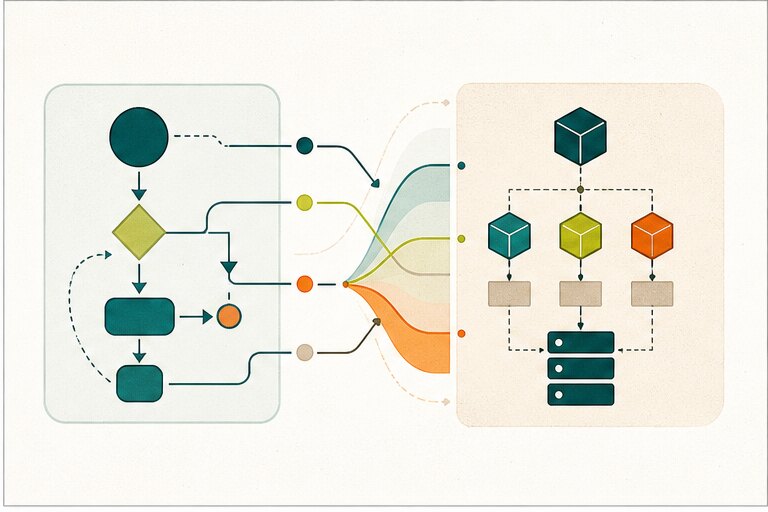
Some teams use the design-thinking activities “empathize, define, ideate, prototype, and test.” Those activities can support UCD, but they are not a required UCD stage model. The four recurring UCD activities are the safer organizing frame: understand context, specify requirements, produce design solutions, and evaluate them.
1. Understand context
Start with the people, goals, and conditions that matter to the decision. Record the task, environment, device, time pressure, accessibility needs, handoffs, and consequences of error. Personas and journey maps can make patterns easier to discuss, but treat them as evidence-based working models. Do not use a persona to stand in for research.
Scenarios should describe a goal and context rather than prescribe a screen sequence. For example, “prepare a monthly report while working from a phone on a slow connection” gives the team something to investigate. It does not assume how the person will solve the problem.
2. Specify requirements
Turn research into clear user and business requirements. State who needs what outcome, under which conditions, and how the team will know whether the design supports it. Include content, accessibility, performance, privacy, operational, and technical constraints when they affect the task.
A journey map can show the wider service around a feature. Information architecture work can organise content and navigation. Card sorting can suggest labels or groups, while tree testing can check whether people can find items in the proposed structure. These methods inform the design; they do not replace task evaluation.
3. Produce design solutions
Generate more than one possible solution when the problem is uncertain. Start with sketches or wireframes, then add the interaction and content needed for a realistic task. A storyboard can show what happens before and after the screen. A prototype should include important states such as loading, error, empty, confirmation, and recovery.
Review the design with the team before testing:
- Can the intended user recognise the purpose and next step?
- Does the design support the user’s language and workflow?
- Can users recover from a mistake without losing work?
- Are content, contrast, keyboard access, focus, and other accessibility needs addressed?
- Does the design expose unnecessary data collection or permissions?
4. Evaluate the design
Choose an evaluation method that matches the risk. Use usability testing to observe realistic tasks. Use contextual inquiry to observe and discuss work in its setting. Use interviews to understand reported needs. Use analytics or support evidence to locate patterns at scale. Keep observed behaviour, reported opinion, and interpretation separate in the notes.
Evaluation is continuous. Test a rough flow before visual polish, test a prototype before development, and test the live experience after release when the decision justifies it. The timing may change; the evidence loop remains.
5. Iterate and hand off
Group findings by task, user impact, confidence, and business or technical risk. Assign an owner to each decision. Update requirements and the design, then re-test the changes that matter most. A handoff is complete when the team can explain the user goal, accepted constraints, important states, and evidence behind the decision.
Related: What is the difference between a Software and a program?
How to create a user-centered design process
Use the following plan when a decision needs evidence. Keep the study small enough to run well, but do not let convenience decide who represents the product’s users.
1. Define the decision
Write the decision the research must inform. State the user, task, context, risk, and outcome that matter. Examples include choosing a navigation label, checking whether a new user can complete setup, or deciding whether a workflow needs redesign.
2. Recruit the right participants
Screen for the behaviours, role, experience, environment, and constraints that matter to the decision. Include different user groups only when their tasks or risks differ. Record inclusion and exclusion criteria, recruitment source, and any conflicts of interest.
Use a small, relevant set for formative learning and run another round when the design changes. If the goal is to estimate a rate or compare variants, define the sample and analysis before the study and recruit a group suitable for that claim. Never present a convenience sample as representative of every user.
3. Obtain consent and protect data
Explain the purpose, activities, recording, data collected, intended use, access, retention, and withdrawal process before the session. Obtain the consent required for the context. Do not ask participants to use real passwords, payment details, private customer records, or other secrets in a test environment.
Mask or redact sensitive fields in recordings and notes. Limit access to the research team, store the minimum data needed, and delete it according to the agreed retention plan. Do not publish a participant’s face, voice, screen, or words as a case study without separate permission.
4. Prepare the task and guide
Give participants a realistic goal rather than a list of interface instructions. Define what counts as success, what counts as a critical error, when assistance is allowed, and when the task stops. Use the same opening and task wording across sessions. Pilot the guide to find unclear instructions before recruitment starts.
5. Run the session
Moderators should remain neutral, avoid teaching the interface, and allow a participant to work through confusion. Record the path, errors, assistance, questions, and notable quotes. Ask follow-up questions after the task so that reported preference does not replace observed behaviour. If a task is affected by a prototype defect or moderator error, record that limitation.
6. Analyze the evidence
Separate observed behaviour, participant statements, researcher interpretation, and proposed action. Group findings by task and user impact. Mark the evidence source, confidence, severity, and affected user group. Compare findings with analytics, support contacts, or other research when those sources answer the same question.
Do not convert a small qualitative study into a percentage for the full user base. If a quantitative result is needed, use a suitable sample, predefined measures, and an analysis that matches the question.
7. Decide, change, and re-test
Link each important finding to a decision, owner, and next step. Fix a blocking issue, change the prototype, update the requirement, or record why the team will not act. Re-test the changed path with the same success criteria. Continue the cycle while the evidence and product risk justify it.
Worked example: from a finding to a change
The following is an illustrative reporting format, not an observed Hapy case:
- Question: Can a first-time administrator invite a teammate without help?
- Task: “You have created a workspace. Add a teammate who needs access to the project.”
- Success criteria: The participant reaches the team area, sends the invitation, and does not need moderator directions. Record completion, critical errors, assistance, and time only if timing is relevant to the decision.
- Finding: The participant looks under “Account” because the prototype labels the relevant area “Manage seats,” then cannot find the invitation control.
- Interpretation: The information architecture and label do not match the task language. This observation does not prove that every user will have the same problem.
- Action: Test a “Team” label, place an “Invite member” control in that area, and add a clear confirmation. Re-run the same task with participants who meet the defined administrator criteria.
User-centered design principles
UCD is strongest when the team follows a few clear principles:
- Involve users early and often: Include the people affected by important decisions, not only at final approval.
- Make context and requirements explicit: Record the task, conditions, constraints, and outcome the design must support.
- Use evidence with clear limits: Match the claim to the method and sample. Mark assumptions and uncertainty.
- Include accessibility and different needs: Consider different abilities, devices, environments, languages, and levels of experience when they affect the task.
- Keep a feedback loop: Evaluate the design, learn from the result, and update the requirement or solution.
- Share ownership: Product, design, engineering, research, and business stakeholders should understand the evidence and their decision rights.
What to remember about UCD
UCD turns empathy into decisions that a team can inspect. A feeling or frustration is a useful starting signal. The team still needs to understand the task, confirm the context, define a requirement, choose an appropriate method, and evaluate the proposed solution.
Use evidence instead of preference
Personal expertise and design judgment are useful inputs, but they are not the same as user evidence. State when a decision is based on a hypothesis, a heuristic review, observed behaviour, reported opinion, analytics, or another source.
Balance user and business goals
UCD does not mean ignoring commercial or technical constraints. It means making those constraints visible and checking whether the resulting product still supports the user’s important goals. When the goals conflict, record the tradeoff and decide who owns it.
Keep the loop proportionate
Not every decision needs a large study. A risky workflow may need observation, task testing, accessibility review, and technical validation. A low-risk wording change may need a lighter check. Choose enough evidence for the consequence of being wrong.
Conclusion
User-centered design is a way to connect user context, requirements, design, and evaluation. It helps teams replace untested assumptions with a visible learning loop.
Start with one important decision. Recruit people who match the relevant context. Protect their data. Observe the task. Record what the evidence can and cannot show. Then make the next change and evaluate it again.
If your product needs a structured research and design review, review Hapy’s MVP development work against the user and product evidence it needs.