Software bugs are not all the same. Some are small annoyances. Some block users. Some corrupt data, expose security risk, or quietly damage business decisions.
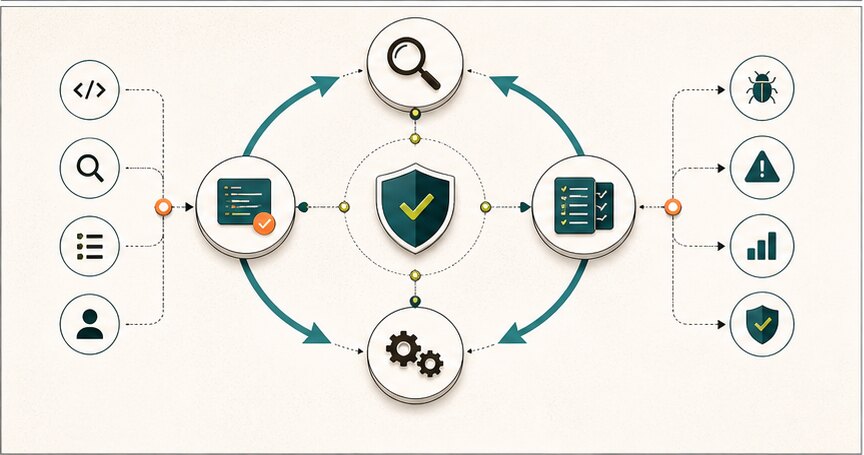
The type of bug suggests where to investigate; its impact and urgency determine what to do next. A UI bug may point to design QA. A regression bug may point to weak automated checks. A permission bug may point to unclear requirements or insufficient security review. Classify the issue, record enough evidence to reproduce it, and decide whether the affected workflow can safely ship.
Common types of software bugs
| Bug type | What it means | Example |
|---|---|---|
| Functional bug | Feature does not behave as expected | A form submits but does not save |
| Logic bug | Code follows the wrong rule | A discount applies to the wrong user group |
| UI bug | Interface is visually or interactively wrong | Button overlaps text on mobile |
| Integration bug | External service or internal system does not connect correctly | Payment succeeds but order status fails |
| Performance bug | Software is too slow or resource-heavy | Dashboard times out with larger data |
| Security bug | System exposes data or access risk | User can view another account’s record |
| Permission bug | Roles and access rules are wrong | Staff user can perform admin action |
| Data bug | Data is missing, duplicated, corrupted, or incorrectly transformed | Report totals do not match source data |
| Compatibility bug | Behavior breaks by browser, device, OS, or version | Upload works on desktop but not iOS |
| Regression bug | Old behavior breaks after a new change | Checkout fails after a shipping update |
Classifying bugs helps teams avoid treating every issue as random.
What bugs reveal about the process
Bugs often reveal deeper delivery problems:
- Unclear acceptance criteria
- Weak code review
- Missing test coverage
- Inconsistent environments
- Overly broad releases
- Poor communication between product and engineering
- Technical debt that makes changes risky
- No production monitoring
The fix is not always “test more.” Sometimes the fix is better scope, better architecture, clearer ownership, or a smaller release.
Prioritize bugs by business risk
Not every bug deserves the same response.
Prioritize quickly when a bug affects:
- Payments
- Security
- Data accuracy
- User access
- Core workflows
- Compliance
- Customer trust
- Revenue reporting
- Production stability
Low-impact visual bugs may wait. A rare permissions bug may need urgent attention because the downside is serious.
Turn a bug type into a decision
Bug type, severity, and priority answer different questions. Type describes the failure. Severity describes its impact. Priority decides when the team must act, given that impact, exposure, release timing, and available containment. A frequent cosmetic defect can be annoying without blocking a release. A single confirmed cross-account access defect should stop the affected release path until access is contained and checked. Do not assign priority from frequency alone.
The ISTQB Foundation Level syllabus lists the test environment, reproduction steps, expected and actual results, evidence, severity, priority, and status as typical parts of a defect report. A useful handoff can be short, but it needs those facts. Do not attach customer records or secrets to an unrestricted ticket.
For a hypothetical support portal, suppose a support-role user can open another account’s refund request. The report should name the role and test environment, show the permitted steps that reproduce the behavior with test accounts, state that access should be denied, and record that the request was displayed. Link a restricted evidence record, identify whether the issue exists in production, and name the owner who will decide containment. The release decision is to block the affected access path until the team fixes and retests the permission rule, including related roles and accounts. This is an illustrative decision, not a report of a Hapy product or client incident.
For security defects, impact also depends on the business context and likelihood of misuse. OWASP’s risk-rating method separates those factors. Use the method to ask better questions; do not turn its example scores into a universal priority threshold.
How bug type should change the response
A bug report should lead to more than a fix ticket. The type of bug should shape the response.
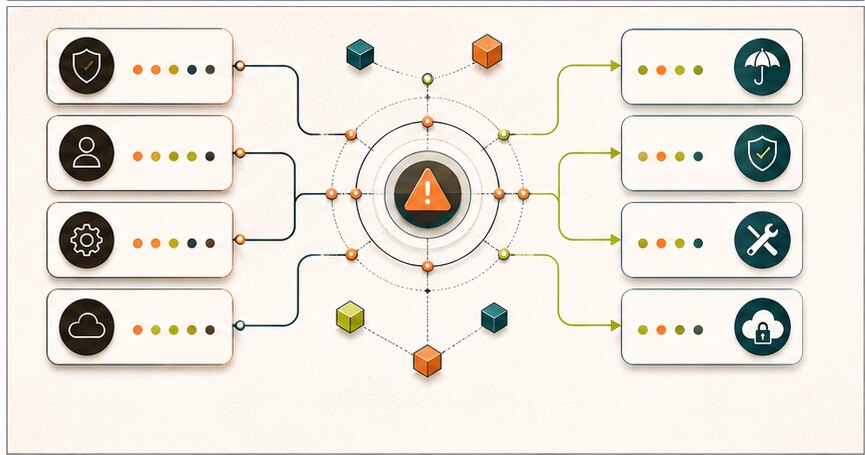
If it is a regression, add or improve a regression check. If it is a permission issue, review access rules across related workflows. If it is a data bug, check whether reporting, imports, or transformations share the same flaw. If it is a UI bug, review the responsive pattern or component that produced it.
The fix should match the pattern, not only the symptom.
How to prevent expensive bugs
Use prevention where failure would hurt:
- Write clear acceptance criteria
- Review edge cases before coding
- Use code review for logic and risk, not only style
- Test critical workflows repeatedly
- Automate regression-prone checks
- Keep staging close enough to production
- Monitor real usage after release
- Review escaped bugs to improve the process
This connects directly to how to reduce bugs in software. The strongest teams do not only fix defects; they improve the system that allowed them.
The Hapy view
Bug lists are only useful when they change behavior. If a team sees the same bug types every release, the problem is not bad luck.
For Hapy, software quality is part of delivery design. Scope, architecture, development environment, testing, release rhythm, and monitoring all affect whether bugs become business problems.
Classify the bug, fix the issue, then fix the pattern. If you need help building that quality loop, review Hapy’s engagements against the risks in your product.