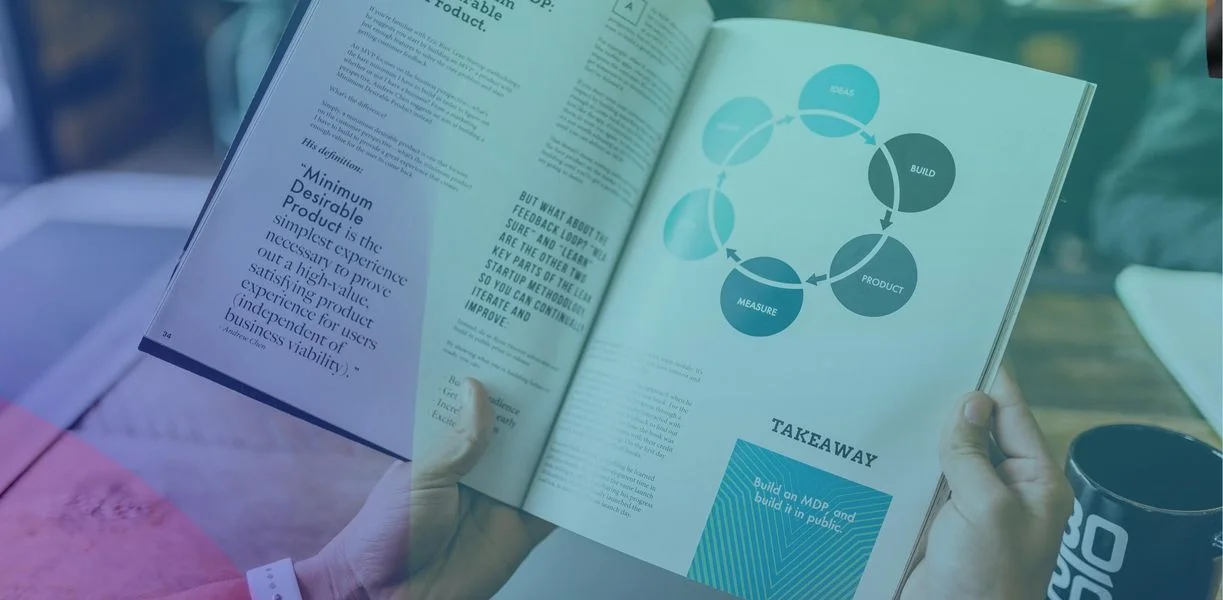
MVP development is not about building a cheap product. It is about building the first version that can teach you something important.
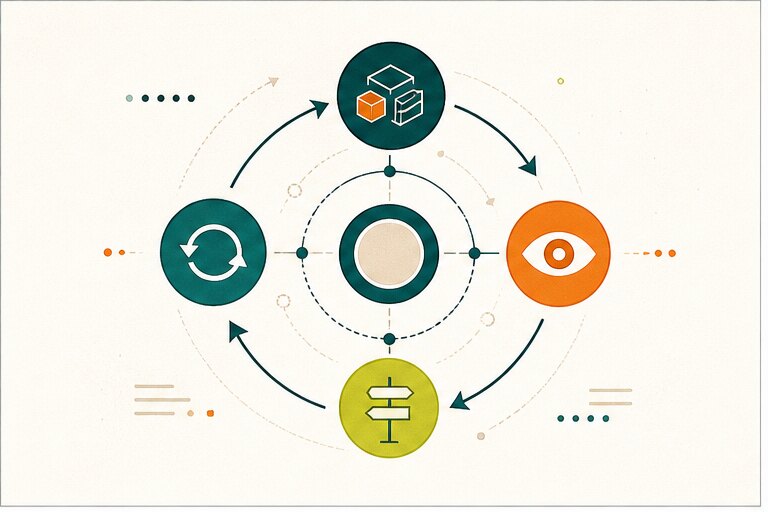
A minimum viable product should be the smallest useful version that tests the core assumption behind the business. If it is too small, users cannot judge the value. If it is too large, you spend too much before learning what matters. For a step-by-step version of the same idea, see Hapy’s guide on how to build an MVP.
The hard part is not understanding the acronym. The hard part is deciding what the MVP should prove. Teams that already have a working first version may also need to understand when a minimum lovable product is the better next bar.
What MVP development should prove
A good MVP usually tests one of these questions:
- Do users understand the problem and solution?
- Will they complete the core workflow?
- Will they pay, sign up, book, invite, or return?
- Does the operational model work?
- Can the product be delivered with acceptable quality?
- Which feature or segment deserves the next investment?
If the MVP cannot answer a decision, it is probably just a demo or a partial build.
If the team is not sure whether it needs a proof of concept, prototype, or MVP, start with the POC vs prototype vs MVP decision guide before committing to a build.
If the team is already working in sprints, use Hapy’s agile MVP development guide to keep scope, telemetry, and roadmap gates from turning into feature churn.
What to include in an MVP
Include only what the first learning goal requires.
| Include | Usually cut or defer |
|---|---|
| Core user workflow | Secondary user types |
| Basic onboarding | Advanced personalization |
| Essential admin tools | Fully automated internal operations |
| Critical integrations | Nice-to-have integrations |
| Analytics for learning | Vanity dashboards |
| Trust and security basics | Heavy enterprise controls unless needed |
| Feedback loop | Full community or marketplace complexity |
The MVP should feel coherent, not incomplete. A narrow product can still be high quality.
MVP development steps
-
Define the user and problem Name the first user and the painful workflow you are solving.
-
Choose the main assumption Decide what the MVP must prove. This could be demand, usability, willingness to pay, operational feasibility, or technical feasibility.
-
Map the core workflow Identify the few steps the user must complete for the product to create value.
-
Cut scope Remove anything that does not affect the first proof point.
-
Design the experience Create flows and screens that make the product usable enough for real feedback.
-
Plan the build Choose architecture, platform, data model, integrations, and release path.
-
Build and test Develop the product in small slices and test the workflows that matter most.
-
Launch and learn Put the MVP in front of the right users and decide the next move based on evidence.
MVP development process decisions
A useful MVP development process turns every feature request into a decision about evidence. The team should know what must be learned, what has to be built to learn it, and what can wait until the signal is stronger.
| Stage | Decision to make | Practical output | What to avoid |
|---|---|---|---|
| Discovery | Which user, pain, and business assumption matter first? | One validation goal and a narrow user segment | Starting from a feature wish list |
| Scope | What must exist for a real user to complete the core workflow? | Must-have workflow, deferred features, and acceptance criteria | Treating every “nice to have” as version-one scope |
| Design | What level of product quality is needed for trustworthy feedback? | Clickable flows, key screens, onboarding, and failure states | Confusing rough with unclear |
| Build | Which architecture choices support learning without overbuilding? | Working product slices, data model, integrations, QA plan, and analytics | Disposable code that cannot survive the first iteration |
| Launch | What outcome will trigger the next decision? | Launch cohort, tracking plan, feedback loop, and decision rule | Measuring only whether the product shipped |
This is where a checklist helps. Before the build starts, use the MVP development checklist to confirm the user, workflow, scope boundary, QA bar, analytics, and post-launch decision rule.
How to use an early timeline
An illustrative 8 to 16-week plan might cover one web workflow, two engineers, part-time design and QA, one established integration and a product owner who resolves questions within two working days. For an invoice MVP, allow time for scope and design, creation and sending, payment-status reconciliation, testing and a limited pilot. Some work overlaps; the range is a planning heuristic, not a delivery promise or a Hapy historical average.
Native apps, uncertain APIs, data migration, procurement or regulated workflows change the estimate. Obtain a task-level plan after discovery and include launch measurement and support instead of ending the schedule when coding stops.
When MVP development services are useful
MVP development services are most useful when the founder knows the problem but does not yet have the product, design, and engineering capacity to turn that problem into a testable first version. The right partner should help shape the product, not just take tickets.
A practical MVP development service should include:
- Product shaping before sprint work begins
- UX decisions around the core workflow
- Engineering choices that fit the next 6 to 12 months
- QA and launch readiness for the version-one experience
- Analytics and feedback loops that show whether the MVP worked
- Post-launch planning based on evidence, not backlog momentum
If the question is whether to hire internally, use an agency, or combine both, compare the tradeoffs in the MVP agency vs in-house guide. If the idea still feels early, book an MVP scoping call before asking for a build estimate.
MVP mistakes to avoid
Avoid:
- Building every feature investors might ask about
- Treating the MVP as disposable code with no standards
- Hiding unclear product decisions inside development
- Launching without analytics or feedback
- Copying competitors without understanding your wedge
- Automating operations before the workflow is proven
- Measuring success only by whether the product launched
The MVP is not successful because it shipped. It is successful if it creates useful signal.
Hapy’s guide to MVP development challenges covers the scope, analytics, QA, integration, and launch risks that usually weaken that signal.
MVP vs prototype vs full product
| Type | Purpose |
|---|---|
| Prototype | Show or test the experience before full build |
| MVP | Launch a usable first version to learn from real behavior |
| Full product | Expand after the core value and operating model are clearer |
A prototype can help you raise, sell, or test flow. An MVP should be usable enough to validate the next business decision.
The Hapy view
MVP development is a discipline of restraint. The founder’s job is not to prove every future feature. It is to prove the next risky assumption with enough quality to be trusted.
Hapy’s MVP Development engagement is built around that idea: scope less, build the right first version, and learn before adding burn, headcount, or platform complexity.
The best MVP is not the biggest version you can afford. It is the smallest version that gives you a confident next move.