Fractional CTO cost depends on reserved time, operating responsibility and scope. Providers sell hourly advice, monthly retainers, day sessions and fixed assessments. Compare a written brief and current quotes rather than treating a broad published range as the price of your engagement.
The right number depends less on the title and more on the job. A founder who needs two calls a month to review vendor decisions should not pay the same as a startup that needs a senior technology leader inside weekly product, architecture, hiring, security, and investor conversations.
That is why the better question is not only “how much does a fractional CTO cost?” It is “what technical decisions are expensive enough that we need senior leadership before we hire a full-time CTO?”
For startups and growing companies, a fractional CTO can fill that gap. You get senior technology leadership for a defined slice of time: enough to shape the roadmap, reduce technical risk, guide the team, support fundraising or sales conversations, and keep the product moving without committing to a full-time executive too early.
If you are comparing this with a broader CTO engagement, Hapy’s CTO as a service guide explains the related models. If you already know you need flexible senior technology support, the next step is understanding rates, retainers, and what actually changes the price.
For a risk-based view of the same decision, compare fractional CTO rates by startup risk before choosing hourly advice, a monthly retainer, embedded leadership, or a fixed project.
How much does a fractional CTO cost in 2026?
One provider-published reference gives useful context: FractionalCXO.to’s March 9, 2026 pricing guide, reviewed September 8, 2026, describes US-market hourly rates of $150–$500 and monthly retainers of $5,000–$15,000 for a stated 10–20 hours per week. These are that provider’s guide ranges, not a representative survey or a quote. The guide uses different scopes across its tables, so do not assume every rate, hour allocation and monthly figure describes one equivalent offer.
Use the range to frame questions, then request a scope-specific proposal. For day rates, record the number of working hours and preparation included. For fixed projects, record the deliverables, evidence access, revision allowance and change-control rules. A fee without those boundaries is difficult to compare.
Fractional CTO hourly rate vs monthly retainer
The fractional CTO hourly rate is useful when the work is limited and easy to define. A founder may need help reviewing a vendor proposal, interviewing a senior engineer, choosing a stack, or checking whether an MVP architecture can support the next milestone.
A monthly retainer can fit when the CTO needs recurring context and reserved capacity. If the leader is expected to join product planning, manage technical tradeoffs, advise the founder, review architecture, guide engineers, and support delivery every week, hourly billing can create the wrong behavior. Everyone starts watching the clock instead of solving the business problem.
| Engagement type | Choose this when | Watch out for |
|---|---|---|
| Hourly | The question is narrow and the founder can execute the advice. | Advice may not translate into delivery if nobody owns follow-through. |
| Monthly retainer | The company needs recurring technical leadership. | The scope must be clear or the retainer becomes a catch-all. |
| Day rate | The team needs a focused workshop or audit. | One intense day rarely fixes deeper execution problems. |
| Fixed project | The deliverable is clear: due diligence, roadmap, architecture plan, team audit. | Fixed work can miss new risks if discovery is too shallow. |
Consider a retainer when technical decisions recur every week and someone will act on the recommendations. If the product is pre-build or pre-MVP, a short advisory sprint may be enough. If the product is live and the team is shipping, a retained fractional CTO is usually more useful.
What changes fractional CTO rates?
Fractional CTO rates rise when the role moves from advice to accountable leadership. A casual advisor can be cheaper. A senior operator who is expected to make hard technical calls, guide a team, reduce delivery risk, and support fundraising will cost more.
The biggest cost drivers are:
- Company stage: Early product decisions and leadership across several established teams require different capacity; stage alone does not determine the rate.
- Product complexity: SaaS, marketplaces, AI products, fintech, healthtech, and multi-tenant platforms carry more risk.
- Responsibility level: A bounded architecture review and ongoing ownership of roadmap, delivery, hiring and security should be quoted separately.
- Time commitment: Two hours a month is different from one or two days a week.
- Team maturity: A strong engineering team needs guidance; a weak or missing team needs leadership and sometimes rebuilding.
- Urgency: Rescue work, security incidents, investor deadlines, and broken launches usually cost more.
- Market and geography: U.S., U.K., GCC, and remote global pricing can vary widely.
The cheapest fractional CTO is not always the lowest-risk option. If one wrong architecture decision creates three months of rework, the rate was not the expensive part.
Fractional CTO cost compared with a full-time CTO
A full-time CTO is the right move when technology leadership is core to the company every day and the startup is ready for a permanent executive. But the cost is not just salary.
Compare the fractional fee and internal coordination time with a full-time package that separately lists salary, benefits, recruiting, onboarding and equity. Use current employer ranges and candidate discussions for your location; an employee salary benchmark is not a consulting rate.
| Option | Budget basis | Capacity tradeoff |
|---|---|---|
| Fractional CTO | Quoted fee, included hours, overages and internal coordination | Limited reserved availability |
| Full-time CTO | Agreed compensation plus hiring and employment costs | Dedicated leadership capacity |
| Senior engineer taking leadership duties | Compensation and time removed from implementation | May need management or business support |
| Agency technical lead | Project fee and explicitly included leadership scope | Delivery priorities may differ from owner-side strategy |
If the company needs daily executive leadership, hire full-time. If the company needs senior judgment before it can justify that commitment, fractional can be the better bridge.
Who is a Fractional CTO?
A fractional CTO is a senior technology leader who works with a company part-time, usually on a retainer, hourly, day-rate, or project basis. They bring the judgment of a chief technology officer without requiring the company to hire a full-time executive before the business is ready.
The role can be advisory, hands-on, or somewhere between the two. In one startup, a fractional CTO may help the founder choose the right MVP architecture and interview the first engineers. In another, they may review delivery every week, guide the product roadmap, manage technical debt, support investor diligence, and help the company decide when to hire a permanent CTO.
A good fractional CTO should connect technical decisions to business outcomes: cost, speed, quality, risk, security, scalability, hiring, and customer trust.

Interim CTO vs Fractional CTO vs Part Time CTO
These terms are related, but they are not identical. The right choice affects both cost and expectation.
1- Interim CTO
An interim CTO temporarily fills a leadership gap. This works when a CTO has left, hiring is in progress, a technical crisis needs executive ownership, or the company needs continuity until a permanent leader arrives.
2- Fractional CTO
A fractional CTO owns a defined part of the technology leadership function on an ongoing basis. They may work a few hours a week, one day a week, or several days a month depending on the company’s stage and needs.
3- Part-time CTO
A part-time CTO usually has a broader ongoing role but fewer hours than a full-time executive. The distinction can be fuzzy in practice. The important thing is to define ownership: are they advising, deciding, managing, hiring, representing technology to investors, or owning delivery outcomes?
How to budget for fractional CTO services
Budget from the outcome you need, not from a title alone.
| Need | Sensible budget posture |
|---|---|
| One-off advice | Pay hourly or day-rate for a narrow technical question. |
| MVP planning | Use a short project or sprint to define scope, architecture, risks, and team needs. |
| Weekly product and engineering guidance | Use a monthly retainer with clear hours, meetings, and deliverables. |
| Technical rescue | Expect higher rates because the work needs diagnosis, decisions, and urgency. |
| Scaling engineering leadership | Budget for a deeper retainer or start hiring a permanent CTO. |
For a startup, the easiest mistake is paying for advice without leaving budget for execution. If the fractional CTO identifies architectural risk, hiring gaps, product scope problems, or delivery issues, the company still needs time and money to act on those findings.
A like-for-like monthly budget example
For a hypothetical 32-hour monthly engagement, allocate 8 hours to roadmap and architecture decisions, 8 to delivery and vendor review, 4 to hiring, 4 to founder discussions and 8 to preparation and written follow-through. The allocation is a planning example, not a claim about a typical retainer.
Use the supplier’s actual rate or fixed fee. Record the country, currency, tax treatment and quote date. Compare two offers using the same 32-hour scope and response window; dividing a retainer by included hours gives a useful capacity comparison, but reserved availability may also be priced.
Exclude hands-on implementation, 24-hour incident coverage, legal advice, specialist security testing and cloud usage unless the agreement includes them. Add an engineering execution budget, onboarding time and a contingency for discoveries. A lower leadership fee does not save money if the team cannot act on the decisions.
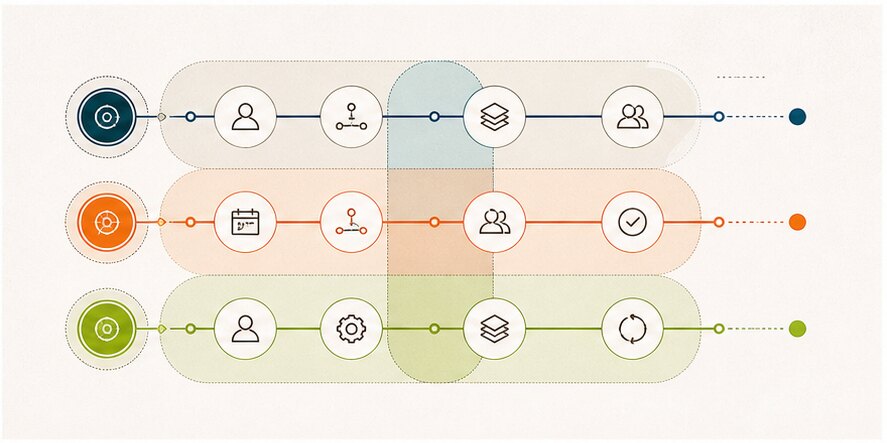
Choose availability and authority together
Fractional and part-time labels overlap. Define who advises, who decides and who executes. An interim CTO fills a temporary leadership gap and may need much more availability; a fractional engagement can also be interim if that is the agreed scope.
Use full-time or sufficiently available interim leadership when critical decisions arise daily or the team has no other accountable operating owner. A small retainer cannot promise the same coverage. Record conflicts of interest, escalation contacts and the handover plan.
Review value before renewal
At the agreed review date, inspect decisions made, risks resolved, delivery changes and remaining work. Look for a clearer roadmap, named owners and useful follow-through. Do not assume immediate savings or superior efficiency from the engagement label.
Hapy’s technical leadership capabilities can help define a scoped engagement. Request deliverables, capacity, exclusions and operating terms before comparing the fee.