A project manager keeps scope, schedule, budget, risks, and communication connected throughout a software project. The role becomes useful when several people or teams must make coordinated decisions and nobody else owns the full delivery picture.
This guide explains delivery ownership, shows a weekly report and change decision, and describes when a separate project manager is useful.
What Is A Project Manager?
A project manager plans and coordinates the work required to reach a defined result. They track scope, timelines, budgets, dependencies, risks, and decisions while keeping the team and stakeholders informed.
The project manager does not need to make every specialist decision. They need to know who owns each decision, when it is due, and what other work depends on it.
Related: The Benefits Of Collaborative Design
Should Companies Hire A Project Manager?
A company should consider hiring a project manager when delivery depends on several teams, deadlines keep slipping, scope changes without a clear decision, or stakeholders cannot see current progress and risk.
Small teams with a strong product or engineering lead may not need a separate project manager. The role makes sense when coordination has become substantial work of its own.
Related: Why Is One Designer Not Enough? Limitations of a Single Designer
What the project manager owns
The project manager maintains the delivery plan, dependencies, risk register, decision log and status report. They coordinate estimates with specialists, identify capacity conflicts and make changes visible before the team commits to them.
The sponsor owns the business case and budget authority. The product owner owns product priorities and accepts scope outcomes within agreed authority. Engineering and quality leads own specialist recommendations and verification. The project manager brings decisions to the right owner; they do not automatically override those roles.
A useful weekly report
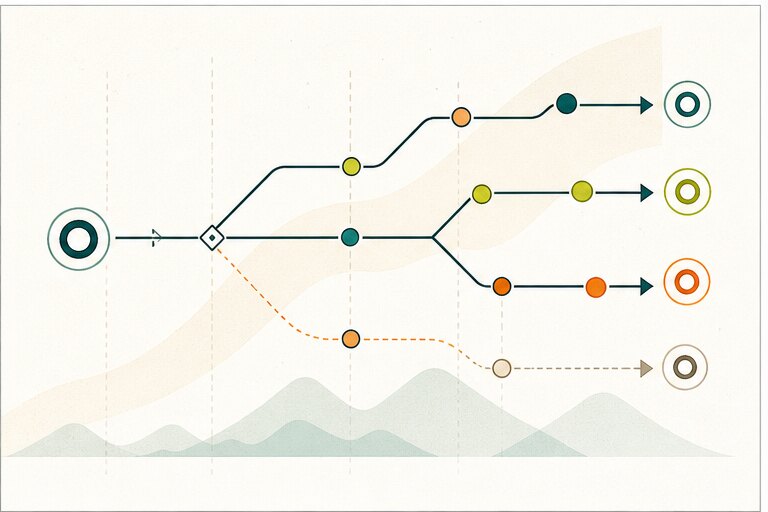
The following hypothetical portal project shows what delivery visibility looks like. Status is amber because a dependency threatens the next milestone; it is not a judgment on individual productivity.
| Report field | Example |
|---|---|
| Accepted this week | Customer login and authorized order-status view passed the agreed checks |
| Next milestone | Pilot group can receive a status-change notification by Friday |
| Current issue | Provider test credentials have not arrived |
| Owner and action | Integration lead follows up with the provider by Tuesday noon |
| Decision needed | Product owner decides by Wednesday whether a manual pilot notification is acceptable |
| Impact | Without a decision, the notification milestone moves; the PM updates the forecast |
| Escalation | Sponsor reviews on Wednesday afternoon if the decision remains blocked |
A report should also show spend to date, the forecast to complete and changes to assumptions. Do not report “80% complete” without explaining what is accepted and what remains uncertain.
Make risk and change decisions concrete
A risk is a possible future event; an issue is already happening. For example, “the provider may not approve production access before launch” is a risk. Record its impact, owner, next action and review date. When approval is actually late and blocks work, track it as an issue with an escalation path.
For a new feature request, ask specialists to assess effort, dependencies and quality impact. The authorized product or budget owner can then defer it, swap existing scope or approve added time and cost. Record the decision and update the plan. The PM coordinates this process rather than quietly promising the extra work.
Quality coordination means making acceptance criteria, test ownership and unresolved defects visible. It can improve the chance of a good outcome, but cannot guarantee customer satisfaction or remove all delivery risk. See the quality-assurance guide for specialist practices.
At Hapy, project management connects client decisions with product, design and engineering work. The PM keeps scope, owners, risks and next actions visible while specialists focus on delivery.
What Qualifications Do You Need To Be a Project Manager?

Project managers need planning, communication, and decision-making skills. The right mix of formal education, certification, industry knowledge, and delivery experience depends on the work they manage.
Look for evidence that a candidate can build a realistic plan, explain uncertainty, listen to specialists, manage dependencies and escalate a decision before it blocks delivery. Ask them to walk through an actual missed milestone and the changes they made afterward.
Formal education and credentials may support that work, but do not prove delivery judgment by themselves. Industry knowledge matters when the project has unfamiliar operating or regulatory constraints. Tool familiarity helps with reporting; it does not replace clear ownership.
A bounded hiring exercise can use the hypothetical report above: ask the candidate to identify missing information, prepare an escalation and explain how they would update the forecast. Evaluate clarity and tradeoffs rather than the appearance of the dashboard.
When the Role Is Useful
A project manager is useful when coordination, risk, and stakeholder communication have become too large to remain side work for another lead. Give the role clear authority, access to the delivery team, and responsibility for keeping decisions and risks visible.
For early software delivery, Hapy’s MVP development engagement can establish the scope, decision owners and release checks a project manager needs to coordinate.
Further questions
How does a project manager measure project success?
Project managers measure project success by evaluating the achievement of project objectives, adherence to project scope, meeting timelines and budgetary constraints, stakeholder satisfaction, and the overall impact of the project on the organization.
Can project management methodologies and tools help project managers?
Yes. A useful method gives the team a shared way to plan, track, and review work. Tools can support that method, but they do not replace clear ownership and communication.
How does a project manager build effective communication?
Project managers define where decisions, risks, updates, and changes are recorded. They listen to the team and stakeholders, then make sure the right information reaches the right people in time to act.
What is the difference between the role of a project manager and a team leader?
While there can be overlap, a project manager focuses on the overall planning, coordination, and success of a project. They coordinate delivery, track resources and make risks to project objectives visible. A team leader, on the other hand, is responsible for guiding and motivating team members to achieve their individual and collective goals within the project.