The project life cycle gives work a shape. It helps teams move from an idea to a finished outcome without losing track of scope, ownership, risk, and decisions.
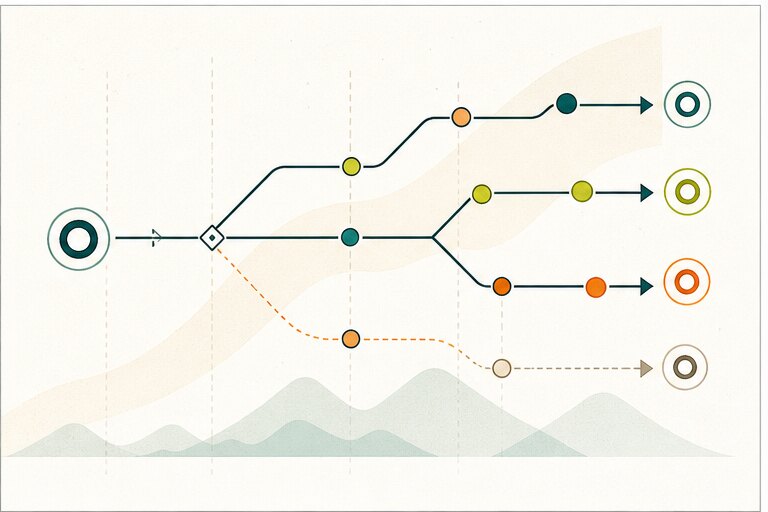
This guide uses five management areas: initiation, planning, execution, monitoring and control, and closure. They are not five isolated steps: monitoring and control run alongside planning and execution, and continue through acceptance. For software building and product work, the cycle often repeats as teams release, learn, and improve.
The mistake is treating the life cycle as paperwork. The point is not to produce documents. The point is to create enough structure that the team can make better decisions while work is moving.
Five management areas across the project life cycle
| Phase | Main question | Output |
|---|---|---|
| Initiation | Should we do this project? | Objective, business case, stakeholders |
| Planning | How will we do it? | Scope, timeline, budget, risks, responsibilities |
| Execution | How do we create the output? | Completed work, collaboration, delivery |
| Monitoring and control | Are we still on track? | Progress visibility, risk management, changes |
| Closure | What is done and what did we learn? | Handoff, review, lessons, final acceptance |
The table is a teaching structure, not a requirement to finish every row before starting the next. Phases and planning can repeat as evidence changes. These areas are useful only when they reflect the real nature of the work. A construction project, website redesign, MVP, ERP implementation, and internal automation project should not be managed exactly the same way.
Initiation: decide if the project is worth doing
Initiation should clarify the reason for the project.
Ask:
- What problem are we solving?
- Who is affected?
- What outcome matters?
- Why now?
- What happens if we do nothing?
- Who can approve scope and tradeoffs?
In software work, this phase is where teams should challenge vague requests. “We need an app” is not enough. The team needs to know what the app should improve, prove, or replace.
Planning: make the work concrete
Planning turns intent into an operating plan.
Good planning defines:
- Scope and exclusions
- Key milestones
- Roles and responsibilities
- Budget or effort assumptions
- Risks and dependencies
- Communication rhythm
- Acceptance criteria
- Change-control expectations
For product and software projects, planning should also include technical discovery, quality expectations, and the software development environment needed to release safely. A timeline without architecture, integration, or data assumptions is usually a guess.
Execution: keep decisions close to the work
Execution is where the team produces the work. The main risk is drift: people start solving slightly different versions of the problem.
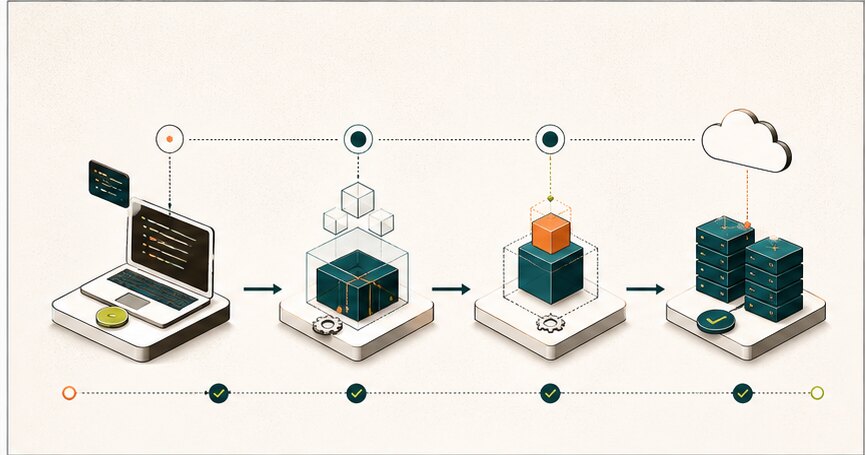
Useful execution habits include:
- Short progress cycles
- Visible backlog or task board
- Clear decision owner
- Regular scope review
- Fast escalation for blockers
- Product and technical review before work gets too far
- Documentation of meaningful decisions
Execution should not become blind task completion. The team should keep checking whether the work still supports the original outcome.
Monitoring and control: manage change without chaos
Projects change. New information appears, constraints shift, users give feedback, vendors miss dates, and technical risks surface.
Monitoring and control is how the team notices those changes and decides what to do.
Track:
- Scope movement
- Budget and time risk
- Quality risk
- Dependencies
- Unresolved decisions
- Team capacity
- Stakeholder alignment
- Release readiness
In software, this phase is closely tied to software development risks. The goal is not to freeze the plan. The goal is to change the plan deliberately when reality changes.
Closure: finish with learning, not just delivery
Closure is more than marking a project complete. It should confirm whether the outcome was accepted, what still needs support, and what the team learned.
For software projects, closure may include:
- Production handoff
- Documentation
- Training
- Support plan
- Analytics review
- Backlog cleanup
- Technical debt notes
- Retrospective
- Next-phase recommendations
If the project created a live system, closure should also define ownership after launch.
Example: a small customer portal
For a hypothetical portal, initiation approves the problem and budget boundary. Planning defines the customer workflow, permissions and release criteria. During implementation, monitoring reveals an integration constraint; the sponsor approves a narrower first release and the team updates the plan. Closure requires accepted behavior, support ownership and a handoff. Monitoring informs every gate, and the next release begins a new planning cycle.
The Hapy view
The project life cycle is useful when it creates clarity. It becomes waste when teams follow phases without thinking.
For MVPs, the life cycle should stay lean and focused on learning. For business systems, it should clarify workflows, ownership, data, and adoption. For software builds, it should keep product judgment and technical risk visible throughout the work.
Hapy uses structure to reduce ambiguity, not to slow teams down. A good project life cycle helps everyone understand what is being built, why it matters, who owns decisions, and what should happen next.
For a software project, Hapy’s MVP development engagement connects the initial scope with delivery milestones, acceptance checks and launch ownership.