Making a social media website is not mainly a technical problem. The hard part is creating a social product that gives people a reason to participate before the network is already valuable.
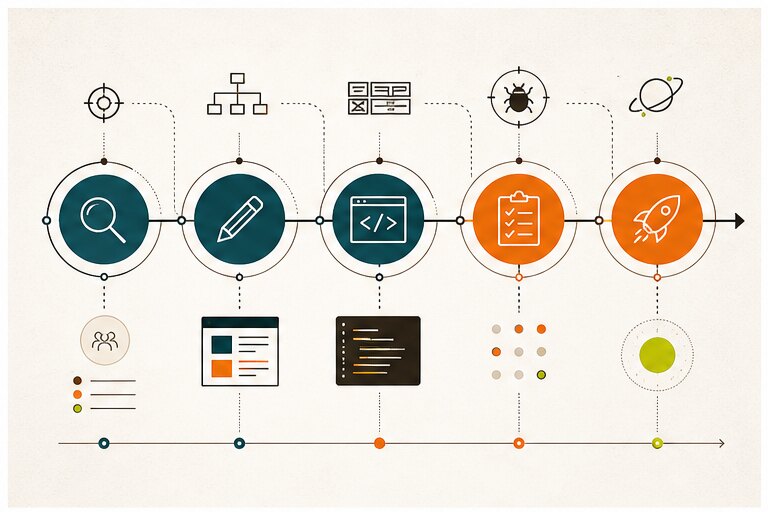
To make a social media website, start with a narrow community, define the core social loop, build the smallest version that supports that loop, and add moderation and trust from the beginning.
If you begin by copying every feature from large platforms, the project will get expensive quickly. Feeds, profiles, comments, likes, groups, messaging, notifications, search, analytics, admin tools, moderation, reporting, and recommendation systems can all matter eventually. They should not all be version one.
Start with the community, not the feature list
Every social product needs a reason to exist. “People can post and follow each other” is not enough. Users already have places to do that.
Before designing the website, answer:
- Who is the first community?
- What do they already do elsewhere?
- What is frustrating about the current option?
- What behavior do you want them to repeat?
- What makes contribution feel worth it?
- What makes the space safer, more useful, or more focused than broad platforms?
A social media website for local runners, independent designers, B2B operators, students, creators, or private customers will need different rules and features. The product should be shaped around the community’s real behavior.
Define the core social loop
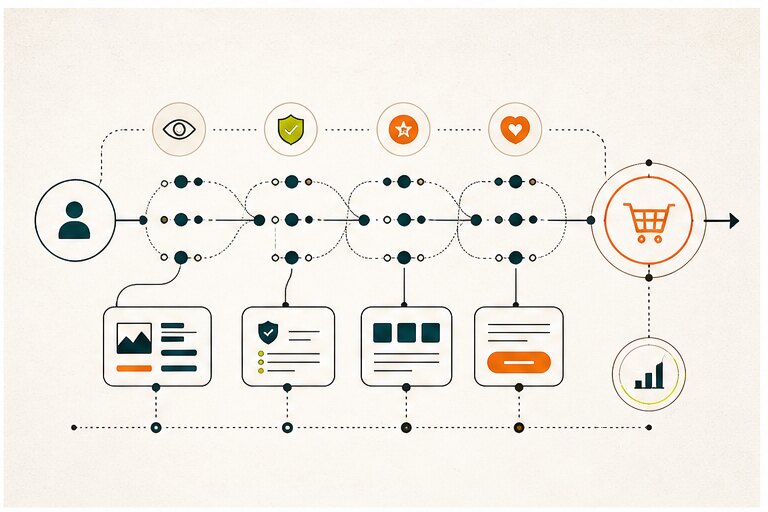
The core social loop is the repeatable behavior that gives the product life.
For example:
- A user creates or discovers something.
- They post, save, review, recommend, ask, or respond.
- Other users react or contribute.
- The original user gets value or recognition.
- The loop gives them a reason to return.
If the loop is weak, more features will not fix it. You need a clear reason for users to create, respond, and come back.
For version one, define the loop in one sentence:
Members of [community] use the site to [repeatable action] so they can [specific value].
That sentence should guide the MVP.
Choose the right first features
A focused social media MVP usually needs fewer features than founders expect.
| Feature area | Version-one question |
|---|---|
| Profiles | What identity or credibility does a user need? |
| Posting | What is the main contribution format: text, image, link, review, question, update? |
| Discovery | How will users find relevant people or content before the network is large? |
| Interaction | What reactions, replies, saves, follows, or shares support the core loop? |
| Notifications | What should bring people back without becoming noisy? |
| Moderation | How will abuse, spam, low-quality posts, and trust issues be handled? |
| Admin | What does the team need to operate the community manually at first? |
The mistake is assuming a social product needs a full platform on day one. It needs one behavior that works well enough for a specific group of people.
Build trust and moderation early
Social products create risk because users create the content. That means trust and moderation are not later features. They are part of the product.
Version one should consider:
- Reporting and blocking
- Admin review tools
- Spam controls
- Clear community rules
- Profile verification or credibility signals where needed
- Private or invite-only access if public launch would create noise
- Content visibility controls
- Basic audit logs for moderation decisions
You do not need a massive moderation system at the start. But you do need enough control to keep the community usable.
Decide whether you need a website, app, or both
Many social products eventually need mobile apps, but a website can be the better starting point if you are validating the community, content format, or workflow.
Start with a website when:
- Discovery through search or shared links matters
- You need faster iteration
- The product is content-heavy
- Users may participate from desktop
- You are still validating the idea
Consider mobile apps earlier when:
- Camera, location, push notifications, or contacts are central
- The product is habit-heavy
- Users need fast access many times a day
- Mobile-first behavior is essential to the core loop
For many founders, the first decision should not be “web or app?” It should be “what is the smallest useful experience that proves the loop?”
Plan the technical foundation
Even a simple social media website has technical complexity. You need to think about accounts, permissions, content storage, media uploads, feeds, notifications, search, moderation, analytics, and data privacy.
Early technical planning should answer:
- What content types will users create?
- How will media be stored and optimized?
- What should be public, private, or member-only?
- What data model supports follows, groups, posts, comments, and reactions?
- How will the feed work before recommendation algorithms exist?
- What admin tools are necessary from day one?
- How will the system handle abuse or spam?
This is where product strategy and engineering need to work together. A feed that looks simple in a mockup can become complicated once ranking, privacy, moderation, and performance are considered.
How to launch without pretending you are already Facebook
The first launch should not try to serve everyone. It should create a dense enough experience for a small group.
Useful launch tactics include:
- Start invite-only or community-led
- Seed high-quality content manually
- Limit the number of contribution formats
- Focus on one niche before opening broadly
- Give early members direct support
- Watch which actions repeat naturally
- Remove features that create noise but not value
The goal is not vanity engagement. The goal is evidence that users want the community enough to return and contribute.
The Hapy view
A social media website is a product strategy challenge before it is a build challenge. The core question is not whether you can build posts, profiles, and feeds. You can. The question is whether the product creates a focused social loop that people actually care about.
Hapy’s MVP Development approach fits this kind of work because social products need disciplined scope. Build too much and you burn time before learning. Build too little and the experience has no reason to come alive.
The right first version should prove the community, the core behavior, and the trust model. The rest can come later.
Worked niche: a private community for independent designers
Illustrative pilot: designers want useful feedback on one piece of work each week. The loop is post a critique request, receive specific feedback, apply it, and return with an update. Test that behavior in an existing moderated space before building a new platform.
For a first custom version, implement in this order:
- Invite-only accounts, minimal profiles, and server-enforced membership access.
- A single critique-post format with work ownership and sharing expectations.
- Replies and a chronological feed; defer ranking algorithms and direct messages.
- Reporting, blocking, moderator removal, and a record of moderation decisions.
- A restrained notification preference and support/contact route.
- Data export/deletion handling and recovery checks before inviting the cohort.
Keep client-confidential work out of the pilot. Explain who can view posts, how long removed content remains in backups, and how members can request help. Do not collect contacts or precise location merely because the platform could use them. Before admitting minors, opening public uploads, or entering new jurisdictions, obtain appropriate privacy, age-related, and moderation review; this list is not a complete legal assessment.
As a suggested learning plan, invite 20 adult participants for four weekly cycles. Track invitations accepted, first contributions, posts receiving useful replies, time to first reply, repeat contributors, moderator workload, and safety reports. An illustrative continuation rule is that at least half of activated members contribute in two later cycles and most critique requests receive an on-topic reply within two days. Set the actual rule before launch based on community cadence and moderation capacity. These small-sample counts are directional, not population estimates. If participation requires constant founder prompting or moderation cannot keep up, change the loop or pause expansion rather than adding features.