An MVP development agency can shorten the path to version one when a suitable team is available before internal hiring can finish. Compare actual start dates, scope, and delivery capacity; the agency model alone does not establish a speed advantage.
The real question is not “agency or in-house?” It is “which model reduces the biggest risk at this stage?” For a pre-seed founder, the biggest risk is often spending six months building before real users react. For a funded team, the bigger risk may be losing technical ownership, hiring too late, or letting an external team make architectural decisions the company will live with for years.
That is why the agency-versus-in-house debate gets sloppy. Speed matters, but speed without ownership creates a second problem. Ownership matters, but ownership without shipping creates a different one.
Use this as a myth-testing guide. The right answer depends on stage, runway, technical risk, founder bandwidth, and whether version one is meant to prove demand, prove feasibility, or become the base for a long-term product company.

Is an MVP agency worth it?
An MVP agency is worth it when outside speed helps the founder reach a real market signal before hiring, fundraising, or runway pressure becomes the main constraint. It is not worth it when the agency is only selling development capacity and the founder still has not decided the user, workflow, success metric, or first launch channel.
The useful test is simple: will the agency reduce the risk that matters most right now?
| If the biggest risk is… | Agency is worth considering when… | In-house or hybrid is safer when… |
|---|---|---|
| Speed to market | You need a credible first version for pilots, demos, fundraising, or early sales before a hiring cycle can finish | You already have a strong technical lead and a team that can ship now |
| Product clarity | The agency can help cut scope, prototype quickly, and turn fuzzy ideas into a measurable version-one plan | The founder has not talked to users or cannot make scope decisions quickly |
| Technical risk | The product is narrow enough for an outside team to build with clear ownership, documentation, and handoff | The product depends on proprietary architecture, deep data, regulated workflows, or long-term platform decisions |
| Cost control | The engagement is milestone-based and can stop after validation | The agency quote hides discovery, QA, analytics, support, or change-request costs |
| Founder load | The founder needs a product/design/build partner but still owns customer learning and launch | The founder wants to outsource uncertainty and disappear until the build is done |
For Hapy, the best agency engagements are not “send us a feature list and come back later.” They are focused version-one builds where the founder stays close to the customer signal and the build team keeps scope small enough to learn.
Myth 1: An in-house team is always faster
An in-house team can be faster if the team already exists, understands the customer, and has a strong technical lead. A new in-house team must include recruiting and onboarding in its schedule; an agency must include staffing availability and discovery.
The delay is not only coding time. It is sourcing, screening, interviewing, compensation, notice periods, onboarding, engineering setup, and decision-making. Ideaware estimates a traditional software developer hire at 12 to 19 weeks before the developer writes production code. Treat that as a commercial staffing source, not a neutral labor benchmark, but the operating point is useful: hiring can consume the entire window in which a focused MVP could have been scoped, built, tested, and launched.
Older hiring research points in the same direction. Rootstrap’s summary of Glassdoor hiring data puts the interview process for software engineers at 35 days on average, before accounting for role definition, sourcing, offer negotiation, and ramp-up.
An agency starts with a different constraint. The team, delivery rhythm, tooling, QA process, and collaboration model usually already exist. That can make the first two weeks more productive, especially when the product is narrow enough for a small squad to run design, backend, frontend, QA, and launch prep in parallel.
The myth breaks when founders compare an agency to an already strong internal product team. If you have a CTO, a product-minded engineer, a designer, and a clear scope, the in-house team may win because the context is already inside the company. If you have only a founder, a spec, and a recruiting plan, compare a named agency team’s available start date with a realistic hiring plan.
Myth 2: Agencies are cheaper
Agencies are not automatically cheaper. They are easier to bound.
An agency usually turns a messy early build into a scoped engagement: discovery, prototype, build, QA, launch, and maybe support. That structure can protect a founder from open-ended payroll before the product earns it. It also makes the burn visible. You can pause, extend, or change the model after a milestone.
An in-house team creates a different cost shape. Payroll, recruiting, benefits, management time, tools, cloud setup, and leadership overhead continue whether the MVP is ready or not. The U.S. Bureau of Labor Statistics reported a May 2024 median annual wage of $133,080 for software developers, and projected 15% employment growth for software developers, QA analysts, and testers from 2024 to 2034. That demand matters because strong early engineers are expensive, competitive hires.
But the agency cost can drift too. A weak scope, vague acceptance criteria, loose change control, unclear ownership, or founder indecision can turn a fixed engagement into a slow negotiation over every new feature. The cheapest model is rarely the lowest hourly rate. It is the model that makes waste visible early.
Cost control depends on four things:
| Cost control question | Agency | In-house | Hybrid |
|---|---|---|---|
| Can spend be capped by milestone? | Usually yes | Not naturally | Yes, if agency backlog is scoped |
| Does context stay inside the company? | Only if handoff is deliberate | Yes | Partly |
| Can the team flex up for launch? | Yes | Slowly | Yes |
| Can the founder stop after validation? | Easier | Harder | Easier than fully in-house |
If version one is still a validation asset, agency spend can be more controllable. If version one is already the core platform of a funded product company, in-house cost may be the better long-term investment.
Myth 3: Agencies create vendor lock-in
Some do. Good ones should not.
Vendor lock-in usually comes from unclear ownership, poor documentation, hidden infrastructure, credentials held by the vendor, custom frameworks nobody else understands, or a handoff squeezed into the final week. That is not an agency problem by nature. It is a governance problem.
For an MVP, founders should separate “who builds it” from “who owns it.” The company should own the repo, cloud accounts, analytics, database, design files, product decisions, documentation, and deployment access. The agency can operate inside those spaces, but the work should not live in a black box.
A safer agency engagement includes:
- Client-owned GitHub, cloud, analytics, and design workspaces from day one.
- A written definition of IP ownership and third-party dependencies.
- Weekly demos tied to working software, not only status updates.
- Architecture notes that explain tradeoffs in plain language.
- Basic test coverage and QA evidence for the workflows that matter.
- A 30 to 90 day transition plan if the company intends to hire internally.
- Access cleanup after launch, including keys, users, and production credentials.
One possible sequence is agency first, hybrid next, in-house later, when ongoing work justifies internal hiring. The agency helps the founder reach market signal. A technical lead or fractional CTO keeps the architecture honest. The future internal team inherits context gradually instead of receiving a rushed folder of code after the contract ends.
For founders still shaping the build, Hapy’s MVP development work is designed around that kind of focused version-one path. For the broader capability view, see Hapy’s zero-to-one product development positioning.
Myth 4: Founder involvement drops when an agency builds
It should not drop. It should change shape.
An MVP development agency can reduce execution load, but it cannot replace founder judgment. The founder still owns the customer, the risk, the wedge, the scope calls, the pricing assumptions, and the launch signal.
The wrong founder behavior is outsourcing uncertainty. That looks like handing over a feature list and hoping the agency discovers the product strategy while building. The result is usually a polished first version that does too much and proves too little.
The right founder behavior is making fast, binding decisions. That means showing up for discovery, reviewing prototypes, cutting features, recruiting early users, defining what must be measured, and deciding what evidence will justify the next investment.
Y Combinator’s guidance on planning an MVP is useful here because it pushes founders toward narrow first products that test a real assumption. For this decision, treat early scope as a hypothesis to test, with a named owner for customer learning and an explicit decision after the pilot.
The founder does not need to manage every ticket. The founder does need to keep the MVP from becoming a small version of the imagined full product.
Agency, in-house, or hybrid: decision table by stage
The fastest model changes as the company matures.
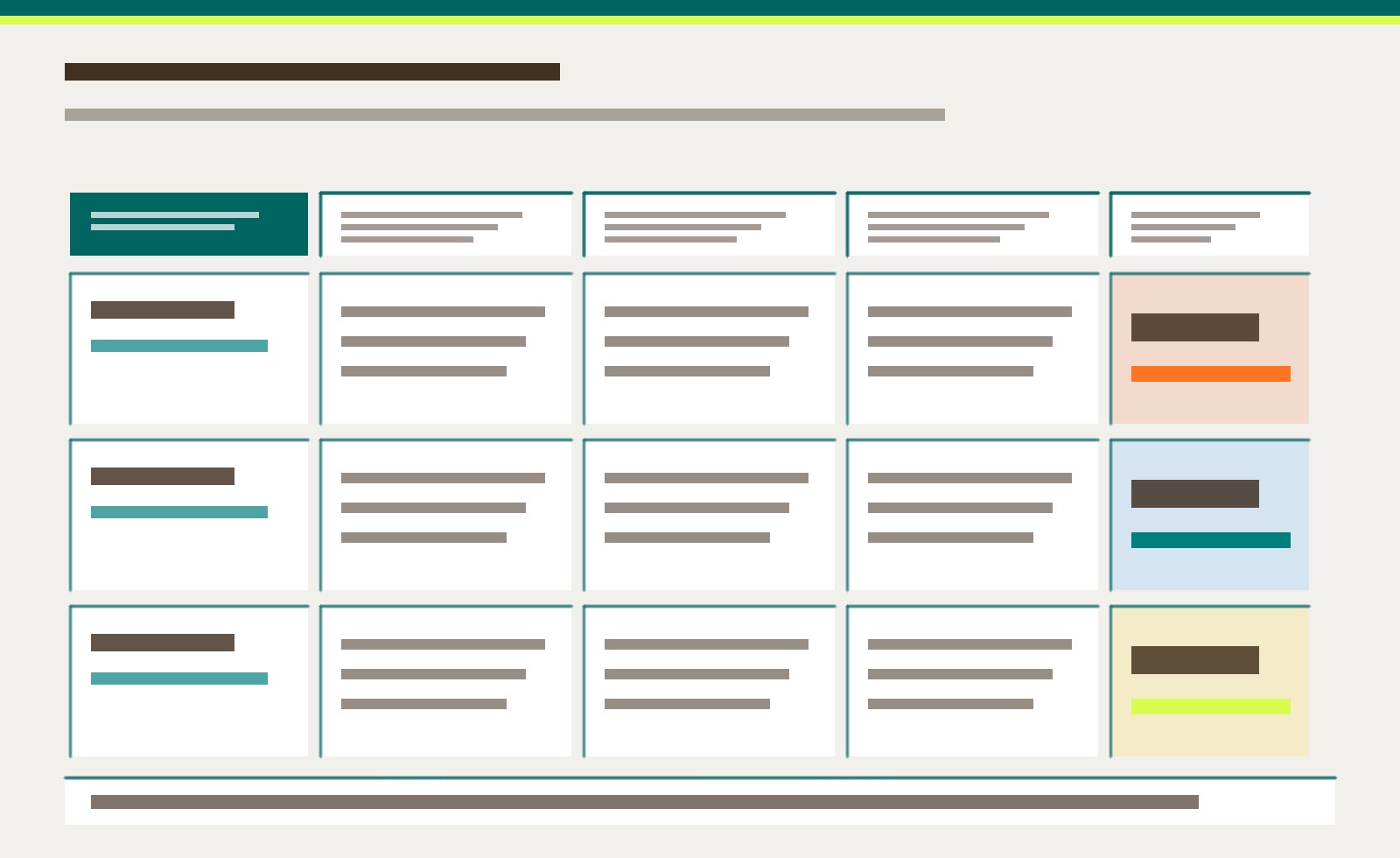
| Team stage | Model to evaluate | Why | Watchouts |
|---|---|---|---|
| Pre-seed, no technical founder | Agency with tight scope | Can provide a usable product, demo, or pilot before a full hiring cycle if the right team is available | Must protect IP, documentation, and infrastructure ownership |
| Pre-seed, technical founder | Hybrid or small agency support | Founder keeps architecture close while outside help accelerates design, frontend, QA, or integrations | Founder can become the bottleneck if every decision waits on them |
| Seed with early traction | Hybrid team | Internal product or technical lead owns roadmap while agency expands execution capacity | Needs clear handoff rules and a single backlog owner |
| Seed with complex technical risk | In-house technical lead plus specialist agency | Core architecture stays inside; specialists handle narrow risk areas | Avoid letting contractors own the whole technical strategy |
| Funded team post-PMF | In-house team | Product knowledge, maintenance, platform quality, and hiring become strategic assets | Agencies can still help with spikes, audits, redesigns, or parallel workstreams |
| Non-technical business building an internal tool | Agency or hybrid | The product may not justify permanent engineering headcount | Require documentation, admin training, and support terms |
This table is deliberately not pro-agency in every row. The closer the software gets to the company’s core advantage, the stronger the case for internal technical ownership becomes.
Where agency support can reduce risk
Agency support can reduce speed, scope, or capability risk when the proposed team has relevant experience and a credible delivery plan.
That includes:
- The founder needs version one live before a funding, pilot, or sales window closes.
- The company has no technical lead and cannot evaluate multiple hires quickly.
- The product needs design, frontend, backend, QA, deployment, and product management at once.
- The MVP is a validation step, not the final technical foundation.
- The scope can be reduced to one user, one workflow, and one measurable signal.
- The founder wants to avoid long-term payroll before traction is clear.
- The team needs specialist help for payments, AI, integrations, mobile, or no-code/low-code acceleration.
This is where the agency model earns its keep. A good agency should not simply ask what features you want. It should ask what the MVP must prove, what can be manually handled, what is too risky to defer, and what can wait until users show demand.
The LowCode Agency case library is useful as directional evidence because it shows the kind of bounded operational MVP that agencies can move quickly. In one agency-reported example, StraightUp Collective replaced spreadsheet-based inventory work with a Glide app built in four weeks, with reported error and efficiency improvements. The lesson is not that every MVP should use no-code. This is a vendor-reported example, not comparative evidence that agencies outperform internal teams. Hiring estimates and commercial case libraries illustrate possible constraints; they do not establish an expected delivery advantage.
Where in-house is better
In-house is better when the software itself is the company, the technical roadmap is strategically sensitive, or speed without deep context would create expensive future risk.
That includes:
- The product already has traction and the roadmap is now a company asset.
- The architecture involves proprietary algorithms, complex data, security, compliance, or infrastructure decisions.
- The team needs continuous discovery, experimentation, and iteration every week.
- Engineering culture, hiring, code standards, and technical leadership are part of the company value.
- The founder has enough runway to hire well and wait for the right people.
- The product will require years of maintenance, performance work, and platform evolution.
The strongest case for in-house is not that employees care more. Good external teams can care deeply, and weak internal teams can drift. The stronger case is context. Product decisions, customer support themes, technical debt, roadmap tradeoffs, and market learning compound inside the company. Once the product has earned long-term investment, that compounding should belong to the company.
Where hybrid wins
Hybrid wins when the founder needs both speed and ownership.
The simplest hybrid model is one internal technical owner plus one external execution squad. The internal owner may be a CTO, founding engineer, product-minded technical lead, or fractional CTO. Their job is not to write every line of code. Their job is to make sure the architecture, backlog, vendor decisions, data model, security posture, and handoff plan serve the company after launch.
The agency then supplies the missing capacity: UX, UI, frontend, backend, QA, DevOps, integrations, or launch support. This can be especially useful after seed funding, when the company has more evidence but not enough hiring velocity.
Hybrid is also the cleanest path when a founder expects to build an internal team later. The agency can ship the first version, support early iteration, and then gradually transfer knowledge as internal hires arrive.
For teams at that point, Hapy’s MVP development checklist is a useful pre-build review, and the agile MVP development guide can help keep sprint work tied to learning rather than feature volume.
A hypothetical agency-to-hybrid handoff
Consider an illustrative eight-week pilot for a single customer onboarding workflow. The agency builds in company-owned repositories and hosting accounts. In weeks five and six, an incoming internal engineer pairs on deployment and support. In week seven, that engineer deploys a change to staging from the runbook and restores a test backup. In week eight, the company accepts the handoff only after access, monitoring, known defects, and backlog ownership are confirmed.
These dates are planning assumptions, not Hapy client results. The measurable outcomes are independent deployment, recovery evidence, complete account ownership, and a named support owner. If those checks fail, budget additional transition work before reducing vendor coverage.
MVP agency red flags
The risky agency is not the one that charges the most. It is the one that makes version one look more certain than it really is.
Watch for these red flags before signing:
| Red flag | Why it matters | Better sign |
|---|---|---|
| They estimate before narrowing the core workflow | The quote is probably pricing assumptions, not a real MVP | They ask what the first version must prove and what can be manual |
| They treat the MVP as a mini full product | The build may become too broad to create useful signal | They cut features and protect the learning loop |
| They own the repo, cloud, analytics, or design files | Handoff becomes harder and vendor lock-in risk rises | The client owns key workspaces from day one |
| They do not discuss QA, analytics, or post-launch support | The product may launch without a way to learn or recover | The plan includes event tracking, smoke tests, bug handling, and a support window |
| They avoid architecture tradeoffs | The founder cannot judge whether shortcuts are acceptable | They explain which shortcuts are safe for validation and which create debt |
| They promise traction, fundraising, or rankings | Build quality cannot guarantee market demand | They promise a clear build process, useful evidence, and honest constraints |
These red flags matter more for non-technical founders because they are often buying judgment, not only code. A strong MVP agency should make the founder’s decision sharper: what to build now, what to fake manually, what to measure, and what to delay until real users ask for it.
The practical verdict
If the company is pre-seed and still proving demand, evaluate an agency when it can supply missing skills within the available runway. Confirm the named team, availability, scope, acceptance criteria, and ownership terms before treating that option as faster or safer.
If the company has a technical founder or early technical lead, hybrid is usually stronger. Keep product and architecture judgment close, then use agency capacity to accelerate the parts that do not need to become permanent headcount yet.
If the company is funded, post-traction, and the product is becoming the business, in-house should become the center of gravity. Agencies can still help, but the company should own the technical roadmap, product learning, and operating system.
The useful answer is stage-based:
| If your biggest risk is… | Choose… |
|---|---|
| Getting to market before runway or attention runs out | Agency |
| Keeping architecture and product judgment close while moving faster | Hybrid |
| Building a long-term technical asset after traction | In-house |
| Avoiding vendor lock-in while using outside speed | Agency plus technical governance |
| Avoiding premature payroll before validation | Agency |
| Building engineering culture as a competitive advantage | In-house |
The best MVP team is not the one with the purest model. It is the one that gets the right version live, measures the right signal, and leaves the company stronger after the first release.
If your next decision is whether the product is ready to build at all, book an MVP scoping call. Use the conversation to identify scope assumptions before comparing proposals.