The Middle East’s technology market is moving quickly, but not every headline is useful for founders. AI announcements, data-center investments, smart-city programs, fintech regulation, cybersecurity demand, and startup funding all matter only when they connect to real customer problems and budgets.
This guide looks at Middle East tech trends shaping 2026 through a practical lens: where governments, enterprises, investors, and customers appear to be creating demand that product teams can act on.
How we chose these Middle East tech trends
We prioritized trends that show at least one of these signals: public-sector investment, enterprise buying pressure, infrastructure buildout, regulatory momentum, startup funding, or visible customer behavior. This is not a prediction list for hype alone. It is a founder and operator checklist for where product opportunities may become real.
For each trend, ask:
- Is there a specific buyer or user with urgency?
- Does the region have a local constraint that creates demand?
- Can a startup or product team build a focused wedge, or is this mainly enterprise infrastructure?
- What regulation, data, talent, or partnership risk could slow adoption?
Middle East tech trends shaping 2026
1. AI and automation move from demos to infrastructure
AI is one area to investigate, with country-specific initiatives rather than one uniform regional market.
PIF launched HUMAIN in May 2025 with an intended role across AI infrastructure, models, and applications. This is evidence of a company launch and strategic scope, not proof that every planned facility or partnership is operational. Verify the specific provider, service, region and availability before putting it in a product plan.
Arabic-language large language models (LLMs) are also gaining ground, enabling local markets to build tools that better serve Arabic-speaking populations. Startups like Mawj.ai are building Arabic AI products for customer-service and knowledge workflows. GenAI is also finding its place in cybersecurity. PwC’s 2025 Middle East findings reported that many regional organizations planned to use generative AI for threat detection, making AI part of the enterprise security conversation rather than only a chatbot trend.
Founder decision: test one Arabic/English workflow using representative examples, human review and a cost baseline before selecting a model or infrastructure partner.
2. Data Centers & Hybrid Cloud Growth
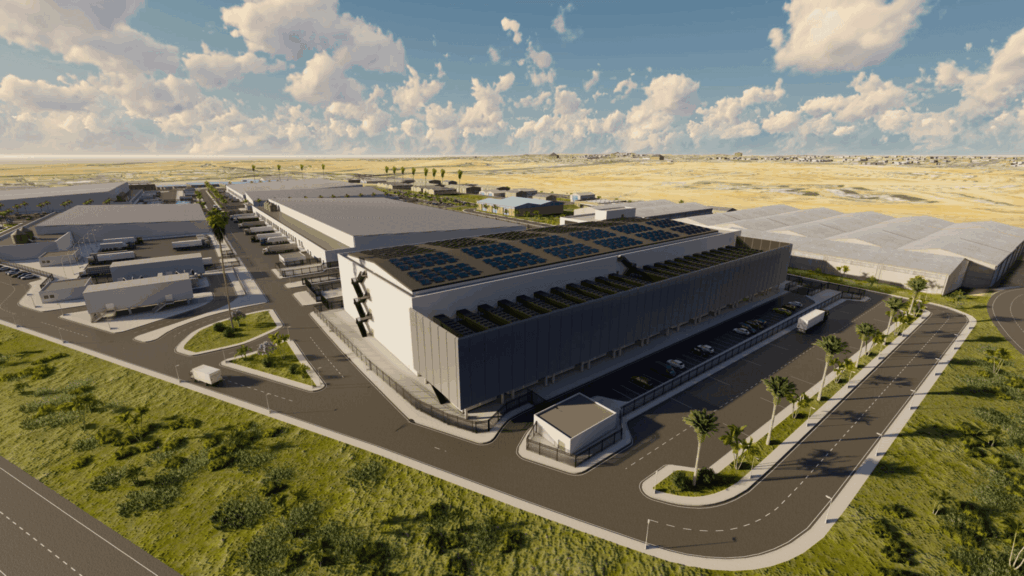
Cloud and data-center announcements need service-level verification. A provider’s regional presence does not establish that every model, database, backup location, or support process meets a buyer’s requirements.
Founder decision: document each data flow and request current regional availability, processing locations, backup locations, subprocessors and latency evidence from the selected provider. Treat an announced region as planned until its launch and required services are confirmed.
The practical question for software teams is data location. If a product serves government, finance, healthcare, education, or enterprise customers, cloud architecture and compliance expectations may shape buying decisions as much as features.
3. Cybersecurity & Digital Trust
Security is both a buying requirement and an operating responsibility. PwC’s 2025 Middle East Digital Trust findings describe regional survey respondents’ priorities and plans; survey intent should not be presented as completed adoption across GCC countries.
Founder decision: ask the target buyer for its actual security-review requirements. Prepare an access model, data map, incident owner, recovery plan and evidence of testing before promising enterprise readiness.
4. 5G, IoT & Smart Cities
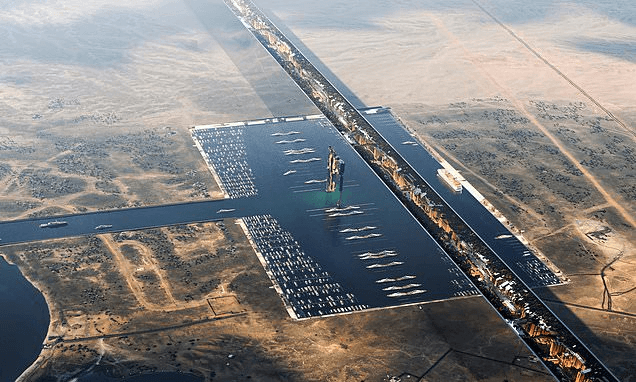
Connected infrastructure can create problems worth solving in metering, asset monitoring, maintenance and dispatch. A smart-city plan does not establish that a particular sensor network, connectivity service or procurement budget is available to a startup.
Founder decision: select one operating site and test the required connectivity, hardware integration, data ownership, battery life and offline behavior with its operator. Use the project images below as illustrations of ambitions, not evidence that every depicted component is delivered.

5. Quantum Computing Ambitions
Aramco and Pasqal announced deployment of a quantum computer in Dhahran on November 24, 2025. The named partner for that deployment is Pasqal. This is a specific industrial installation, not evidence that ordinary business software should move to quantum computing.
Founder decision: require a defined computational problem, a classical baseline, access terms and measurable advantage before funding a quantum proof of concept. Otherwise, track the research without adding it to the product roadmap.
6. E‑commerce & Dark Stores
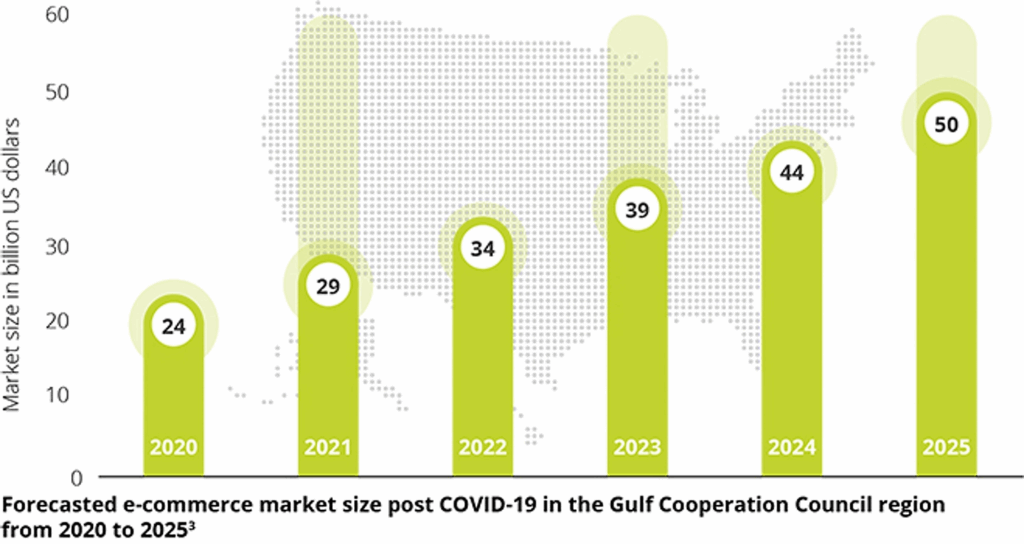
Dark stores are facilities used to fulfill online orders rather than serve walk-in shoppers. Their economics depend on local order density, picking cost, inventory accuracy, spoilage, delivery distance and customer acquisition. Faster delivery alone does not prove profitability.
Founder decision: model one delivery zone using actual basket margin, pick/pack time, delivery cost, refunds and inventory loss. Validate a dispatch or inventory workflow with a real operator. This guide does not use an unverified regional market-size forecast as evidence of demand.
7. Mobility: Autonomous & Electric
Mobility announcements need a clear status and location. Uber and WeRide announced fully driverless commercial operations in Abu Dhabi on November 26, 2025, initially on Yas Island. That dated launch does not establish service throughout the city or elsewhere in the Gulf.
Dubai air-taxi test flights and planned infrastructure are a separate category. RTA’s progress update describes a November 2025 point-to-point test flight and planned stations. A test flight or target date is not confirmation of an unrestricted commercial service.
Founder decision: verify the current operating area, permits, integration access and fleet partner before building a mobility-dependent service. Dispatch, fleet support and charging operations may offer bounded software problems, but each needs an actual buyer.
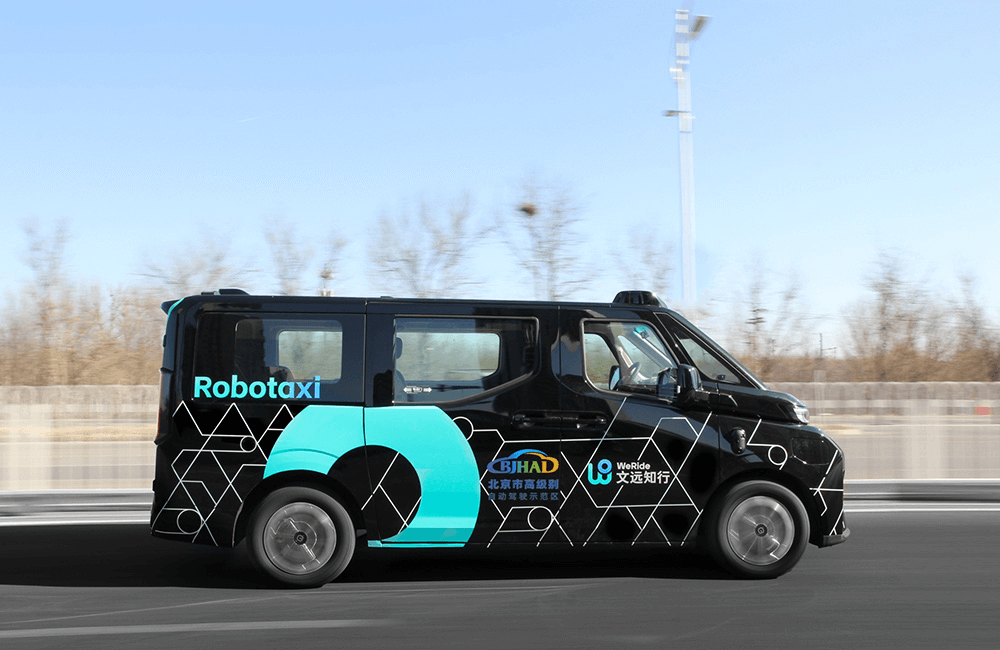
WeRide robotaxi
8. Sustainability & Green Tech
Energy-management and sustainability software should be evaluated against an operator’s measured consumption, reporting obligations and available equipment data. National ambitions are context, not a purchase order or a guarantee of emissions reduction.
Founder decision: propose one metering or reporting pilot with a baseline, data-quality checks and a named operations owner. Separate estimated savings from verified results, and explain the measurement method before making environmental claims.
9. Tech Talent & Ecosystem
The startup ecosystem in the Middle East is thriving. In February 2025, MENA startups raised over $494 million…a 371% month-over-month increase. AI, SaaS, and fintech are leading the way.
That momentum carried into 2026 too: MENA startups raised $563M in January 2026, while Web Summit Qatar 2026 showed how Gulf markets are turning capital, events, and founder residency programs into ecosystem infrastructure.
Founder decision: choose a specific incubator, buyer or investor route and verify its current intake, eligibility and application evidence. An event contact, funding announcement and approved investment are different milestones.
The best opportunity for founders may be to pair regional market knowledge with disciplined product execution. Funding and events can open doors, but products still need clear positioning, reliable delivery, and real customer pull.
Challenges & Risks
Validate country-specific legal, data, procurement and operating requirements. Budget for integration access, local support, sales cycles and changes in program availability. Keep alternatives when a product depends on one infrastructure launch or partner approval.
This is an editorial opportunity checklist reviewed September 8, 2026, not a ranking by market size. The dated sources support the named events; the founder decisions are Hapy analysis to test locally.
Final Thoughts
The Middle East’s tech landscape is no longer a quiet corner of the global market. But founders should treat trends as context, not strategy. AI, cloud, cybersecurity, smart cities, mobility, sustainability, and fintech all create openings, yet the winning products will still be the ones attached to a clear customer problem.
If you’re looking to launch or grow a product in the Middle East, Hapy Co is here to help. We partner with founders to design and build digital products that blend local relevance with global standards.
Want to explore what that could look like for your idea? Let’s talk.